Hokonui Rūnanga Register
  • About us
    • Who we are
    • Murihiku Regeneration
    • Property assets
    • Find us
    • Job vacancies
  • Our history
    • Our whakapapa - a deep connection to this place
    • Wai and Whakapapa
    • The Battle of Waitaramea
    • Poupoutunoa and Kauwaewhakatoro
    • Two Rivers: Mataura (Mata Ura) and Clutha (Mata Au)
  • Events & key dates
    • Energy, Infrastructure and Opportunities Wānanga 2026
    • Energy and Innovation Wānanga 2024
    • Energy and Innovation Expo 2023
    • Science and Innovation Wānanga 2021
    • He Ao Hou - New Futures Murihiku Teacher PD Day
  • Education & training
    • Education - Hokonui Rohe Team
    • Te Ara Aukati Kore - Education, Training, and Capability
    • Have your say!
  • Environment
    • Kaupapa Taiao - Hokonui Floriculture
    • Taonga Research
    • Southern Ocean - Murihiku ki te Tonga
    • Energy Transition Programme
    • Te Tapu o Tāne
    • Our Kaimahi - Staff
  • Health & wellbeing
    • Whānau Ora Navigators
    • Community youth worker and advocacy service
    • Hokonui Community-Led Health
    • Kaumatua Health Days
    • Te Kakano - Nurse-led Clinics
    • Our Kaimahi - Staff
    • Hokonui Takiwā Health and Wellbeing Village of Support
    • Referral form
    • COVID-19
  • News
    • Pānui updates
    • Photos
  • Contact us
    • Register
  1. Home
  2. News

News

Combined Murihiku Rūnaka Hui last Saturday

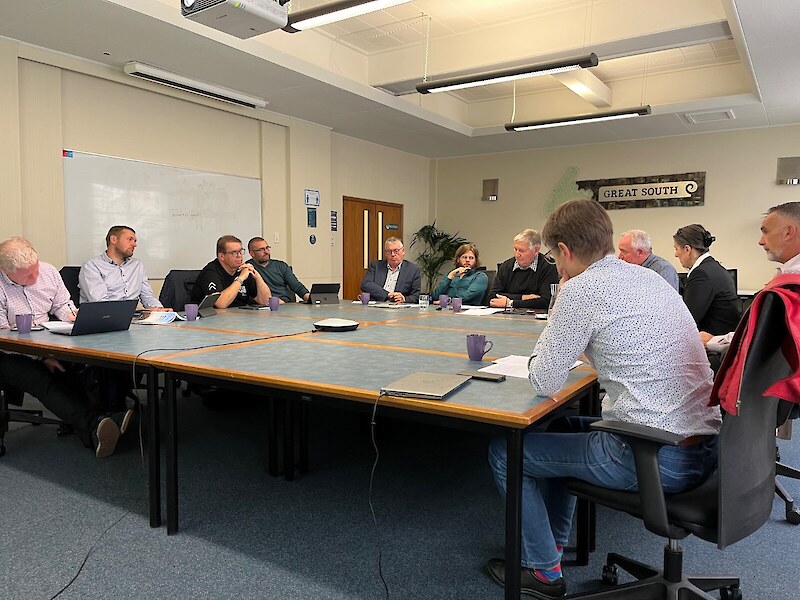
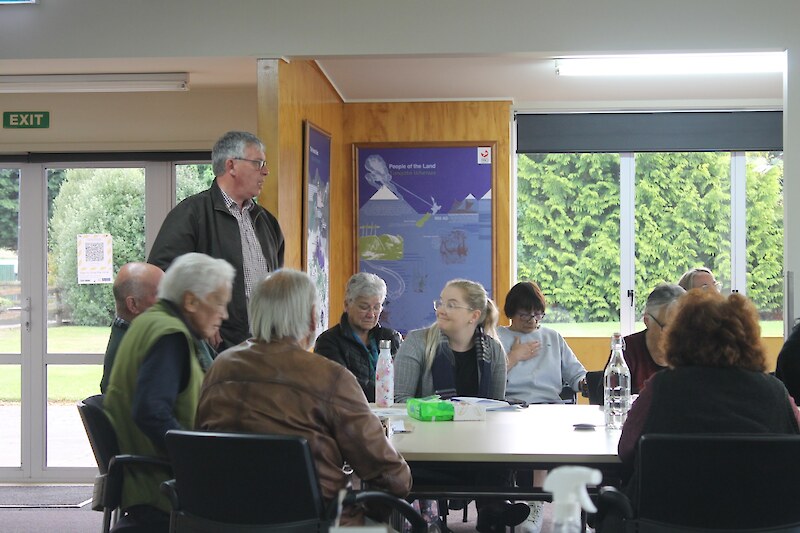
On Saturday 9 April, Hokonui Rūnanga hosted the second combined Murihiku Rūnaka Hui for 2022. These hui are an opportunity for rūnaka members to come together to discuss issues, provide updates and provide feedback on topics relevant to Murihiku and Ngāi Tahu more generally.

Terry Nicholas (Hokonui Rūnanga Manager) addressing the Combined Murihiku Rūnaka Hui on Saturday.Terry Nicholas (Hokonui Rūnanga Manager) addressing the Combined Murihiku Rūnaka Hui on Saturday.

Guest speakers on Saturday included Arihia Bennett (Chief Executive Officer of Te Rūnanga o Ngāi Tahu) and David Perenara-O’Connell, who gave an update on the establishment of the Māori Health Authority and Iwi-Māori Partnership Boards.

Cindy Robinson (Te Rūnanga o Ngāi Tahu) then followed with an overview of the RMA reforms and the three replacement pieces of legislation. Her role is to bring Ngāi Tahu perspectives to the forefront of resource management planning, including endeavouring to have the Ngāi Tahu takiwā boundary recognized as the geographical boundary for all governance and decision-making bodies.

The Future for Local Government review was presented by Emma Forrest, a member of the Strategy and Influence team at Te Rūnanga o Ngāi Tahu. The purpose of this review is to: Identify how the system of local democracy and governance needs to evolve over the next 30 years to improve the wellbeing of New Zealand communities and the environment, and actively embody the Treaty partnership. Emma will be seeking feedback from papatipu rūnanga over coming weeks.

Hui participants were then given an update on the Southland Just Transition Aquaculture Workstream by workstream lead Aimee Kaio. Aimee highlighted the potential scale of this new industry and the importance of Iwi leading in this space. The issue of infrastructure needs for the region more generally also arose from this korero.

Jacqui Caine, Tane Davis and Tā Tipene O’Regan then gave a presentation about Whenua Hou and the current limitations experienced by Ngāi Tahu around legal title, access, governance and management of the island. They are seeking mandate from papatipu rūnanga to continue to explore vesting of Whenua Hou as an option with the Department of Conservation.

Other agenda items covered on the day included a discussion about the tikanga and kawa of Murihiku Upoko; Tiwai remediation; Rūnanga updates; and an update from Jana Davis, CE of Te Tapu o Tāne.

Comprehensive minutes from the day will be available from your rūnaka office after Easter.

Posted: 14 April 2022

Southland congratulated as work streams position region to be industry world leaders

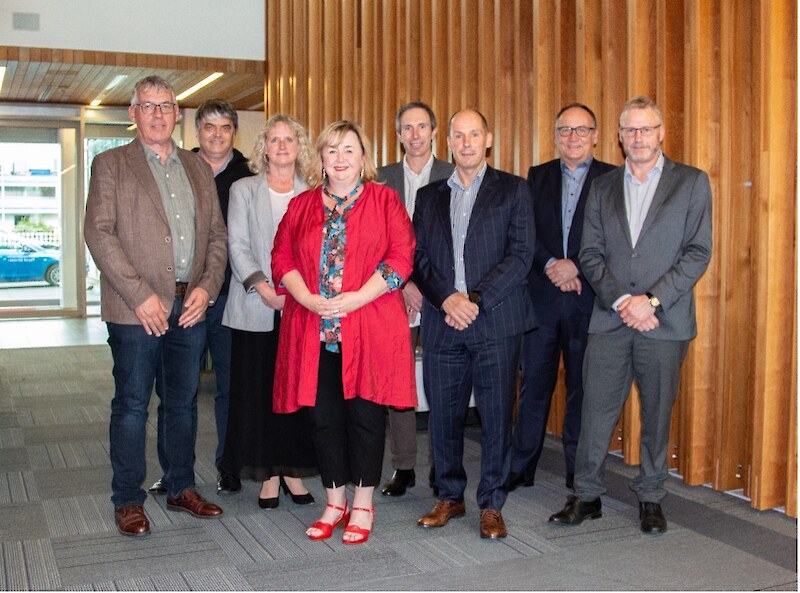
Key members of the Southland community met on 7 April with Labour’s Energy and Resources Minister, Dr Megan Woods, to share the vision of working together to actively shape the future of Southland with the uncertainty of Tiwai’s Aluminium Smelter’s longevity.EOG and Southland Just Transition group met with Energy and Resources Minister, Dr Megan Woods on 7 April. (left to right) Hokonui Rūnanga Executive, Terry Nicholas; Thriving Southland Project Lead, Richard Kyte; Invercargill Labour MP, Dr Liz Craig; Energy and Resources Minister, Dr Megan Woods; Ministry of Business Economic Development and Transitions General Manager, Dean Ford; Southland Business Chamber President, Neil McAra; SIT Chief Executive, Onno Mulder; SIT Chief Financial Officer, Daryl Haggerty.EOG and Southland Just Transition group met with Energy and Resources Minister, Dr Megan Woods on 7 April. (left to right) Hokonui Rūnanga Executive, Terry Nicholas; Thriving Southland Project Lead, Richard Kyte; Invercargill Labour MP, Dr Liz Craig; Energy and Resources Minister, Dr Megan Woods; Ministry of Business Economic Development and Transitions General Manager, Dean Ford; Southland Business Chamber President, Neil McAra; SIT Chief Executive, Onno Mulder; SIT Chief Financial Officer, Daryl Haggerty.

The Southland Just Transition work plan has seen iwi, businesses, education, and community leaders come together to ensure Southland’s future is positive and shoulders the uncertainty of Tiwai.

Yesterday’s meeting felt celebratory, and Minister Woods congratulated the Enduring Oversight Group (EOG) and Just Transition work stream leads on the journey undertaken so far.

“I’m so impressed by the way Southland is working together. We’ve got education, businesses, local government, unions and iwi who are all united in wanting to find what that secure economic future looks like for Southland,” Minister Woods said.

Southland Just Transition is made up of seven work streams led by community leaders. These streams include Long Term Planning, Clean Energy, Worker Transition, Business Transition, Land Use, Community Capability Building and Aquaculture.

With or without Tiwai, the group’s agenda is to secure the future of the region, to keep it buoyant, introduce more skilled jobs, lower carbon, diversify land and water use, and look to productive clean energy usage.

Minister Woods went as far as to reference ‘Team Southland’ and the positive relationships and collaborations were fundamental to the forward momentum, citing there was opportunity to be world leaders in some of the new and extended industries the teams are working on.

Minister Woods also thanked the Enduring Oversight Group (EOG), which operates as governance over the seven work streams. The EOG is made up of 11 members from central government, local government, iwi, unions, business, and the education, agriculture and community sectors.

The purpose of the EOG is to provide strategic governance over the delivery of the Southland just transition work plan.

The EOG will provide feedback on the delivery of the work plan and guide the Secretariat and work streams in their implementation role.

Co-chair of the EOG, Neil McAra said there has been a successful relationship with the Minister all the way through the process and how fantastic it was having all parties on the same page as they continue to work towards the 2023 budget bid.

His comments were echoed by EOG Co-chair, Aimee Kaio.

“Southlanders have always rolled up their sleeves to get the mahi done and it‘s truly wonderful to have such support from government and it’s exciting to all be actively pushing our region forward, securing our economy and social fabric for our community,” Kaio said.

Posted: 8 April 2022

Preliminary Closure Study outlines work programmes in event of NZAS closure

Media Statement from NZAS:

New Zealand’s Aluminium Smelter (NZAS) has today released the findings of its Preliminary Closure Study, outlining for the Southland community the detailed work that will take place to remediate the site as part of any future closure.

NZAS Chief Executive and General Manager Chris Blenkiron commented, “The Preliminary Closure Study is an important step in the NZAS closure and progressive remediation programme.

“While we do see a positive long-term future for the smelter to operate beyond 2024, we have progressed this study to understand what work is needed to remediate the site and provide reassurance to the Southland community,” said Mr Blenkiron.

The Preliminary Closure Study provides an initial overview of key work programmes that would be undertaken, including:

  • Removing all Spent Cell Lining (SCL) material to be recycled for alternative use. This will be achieved through a combination of export and on-site processing, and NZAS is seeking to accelerate this process irrespective of the closure date.

  • Relocating the current landfill to a new lined and capped landfill at a higher elevation on the Tiwai Site

  • Demolishing existing assets and removing foundations to a depth of 1.5 metres

  • Remediating contaminated soil to an industrial standard, noting any future alternative land use will be identified in due course.

Progressive remediation activities to remove waste and improve our environmental performance will take place where possible while operations continue.

The Preliminary Closure Study’s central case has been developed based on a closure date of December 2024, with closure activities estimated to take place over a ten-year period after the end of operations. An extension to operations beyond 2024 would see some activities take place in advance of closure and reduce the timeframe for the successful remediation of the site.

Mr Blenkiron commented, “As a producer of some of the highest quality, lowest carbon aluminium in the world, NZAS is well placed to supply economies focused on decarbonisation. Rio Tinto does see a positive pathway for NZAS to continue operating and contributing to the local and national economy beyond 2024, and is working closely with Ngāi Tahu, government, Southland and key industry leaders to find the best way to achieve this.

“We will remediate the site, whether we stay beyond 2024 or not, and this Preliminary Study shows we have the right plans in place. In the meantime, work is already underway to remove waste and improve our environmental performance. We are also in the process of updating our financial accounts and will release the updated rehabilitation and closure provision in May 2022.

“While we do see a positive future post-2024, we also acknowledge the important work being done by the Southland Just Transitions Working Group and have provided them with the Preliminary Closure Study,” said Mr Blenkiron.

The closure plan contained within the Preliminary Closure Study is not final and further work is needed to develop and confirm a final closure plan. This will include further environmental monitoring and stakeholder engagement, and the completion of a Final Closure Study.

Closure study documents released today include:

  • NZAS Preliminary Closure Study Document

  • Infographic - April 2022 Remediation Update

  • Ecology Environmental Study Report

  • Geology Report

  • Sea Level Rise Impact Assessment

  • Closure Socio-economic Impact Assessment Report

Posted: 7 April 2022

Kaumātua housing units officially opened in Bluff

From Stuff. Reporter: Laura Hooper

It’s hoped six new kaumātua housing units that were officially opened in Bluff will build on Te Rūnaka o Awarua’s vision of creating affordable intergenerational housing.Labour MP for Te Tai Tonga Rino Tirikatene, left, Invercargill mayor Sir Tim Shadbolt, Minister of Housing MP Megan Woods, Upoko o Awarua Rūnaka T⁠Tipene o Regan and Invercargill Labour List MP Dr Liz Craig at the opening of six new kaumātua units in Bluff.Labour MP for Te Tai Tonga Rino Tirikatene, left, Invercargill mayor Sir Tim Shadbolt, Minister of Housing MP Megan Woods, Upoko o Awarua Rūnaka T⁠Tipene o Regan and Invercargill Labour List MP Dr Liz Craig at the opening of six new kaumātua units in Bluff.

The units were built in Christchurch and trucked to Bluff in August 2021, were the result of a $1.898 million grant from the Government’s Covid-19 Response and Recovery Fund.

Te Upoko o Te Rūnaka o Awarua Tā Tipene o Regan, at the official opening on Tuesday, said the units, and the further establishment of housing for whānau on marae grounds, had been a vision for rūnaka leaders since the early 2000s.

“The idea of accommodation on and around the marae is not new. The idea of being intergenerational, with multiple children and whānau and kaumātua has been close to us for a long time,” he said.

“These six new units will help to bring our whānau back to their tūrakawaewae and support our kaumātua to pass down their mātauraka (knowledge) to our tamariki and rakatahi.”

More than 50 per cent of Ngāi Tahu people were now living beyond their takiwā, he said, and as such the units opening needed to be viewed as another step forward and not an end goal.

Minister of Housing MP Dr Megan Woods said it would take time to turn around New Zealand’s housing crisis.

“I don’t think any of us kid ourselves that there isn’t much more to do … the housing crisis is a problem that has been created over many, many years, and it will take time to turn around … we are absolutely committed to solving it,” she said.

The opening of the units had highlighted the importance of “by Māori for Māori” solutions, she said, and was an example of how the iwi and crown were stronger when working together.

Kaumātua Housing projects manager Corey Bragg said there had been strong demand for the kaumātua units before their opening.

“If you take our community, those aged over 65 have more than doubled since the early 1990s, but the population has stayed the same … that’s the demand,” he said.

There was a small amount of work left to be completed, and then families would begin to be shown through the units slowly in line with Covid-19 protocols.

The rūnaka was already considering establishing further whānau housing at the back of the marae in response to positive community feedback around the kaumātua units, he said.

Posted: 6 April 2022

Tā Tipene O’Regan named 2022 New Zealander of the Year Te Pou Whakarae o Aotearoa

From 1News

Tā Tipene O’Regan made history in 1997, signing a deal over 150 years in the making.

On Thursday his mahi (work) as lead negotiator in one of Aotearoa’s first major iwi settlements was recognised across the nation, as the winner of the 2022 Kiwibank New Zealander of the Year Te Pou Whakarae o Aotearoa.

Watch a replay of the awards here.

It has been 25 years since Tā Tipene led representatives of Ngāi Tahu, gathering with Crown officials at Takahanga Marae, Kaikōura, to sign what would become the Ngāi Tahu Claims Settlement Act, Te Kerēme.

The moment was a long time in the making for Ngāi Tahu, almost 150 years after the first formal statement of grievance was made against the Crown.

The settlement of the claim, provided $170 million in compensation to the iwi, along with rights to sites of significance, a role in the conservation of their lands and a ‘unreserved’ apology from the Crown for breaching Te Tiriti, The Treaty of Waitangi.

As one of the first successful treaty claims of its kind, Te Kerēme, helped carve a path for others.

Today, 54 iwi claims against the crown have been settled, totalling $1.5 billion in financial redress.

The Ngāi Tahu settlement, is one of only three Treaty of Waitangi claims to reach $170 million.

But while Te Kerēme might be his crowning achievement, the kaumātua, who is now in his 80s, has served his whenua through many roles in his time.

As Chairman of the Treaty of Waitangi Fisheries Commission he helped craft the treaty fisheries settlements of 1989 and 1992.

As a published scholar and former university lecturer, he chaired and developed the Ngāi Tahu Archive Advisory Committee and was the longest-serving member of the New Zealand Geographic Board.

After he was announced as New Zealander of the Year in a digital Awards ceremony on March 31, Tā Tipene, was presented the kaitaka huaki cloak, Pouhine by the Prime Minister.

Te Rūnanga (Chair) o Ngāi Tahu Kaiwhakahaere, Lisa Tumahai, said the award is very well deserved.

“After his mahi, as Chief Negotiator in the team leading Ngāi Tahu to [a] settlement with the Crown in 1998, he has continued to guide our iwi as a rangatira,” she said.

“This award not only celebrates the contribution Tā Tipene has made to our country.

“But it also highlights how he has influenced the history of New Zealand throughout his entire career.”

While Miriama Kamo, Patron of the Award said Tā Tipene is an example of a living tāonga (treasure).

“The Kiwibank New Zealander of the Year Awards, Ngā Tohu Pou Kōhure o Aotearoa, celebrate people who use their passion to make our country a better place, and Tā Tipene O’ Regan undeniably fits the bill.”

Other winners across six categories include:

  • The University of Canterbury Young New Zealander of the Year, Te Mātātahi o te Tau, Ezra Hirawani (Te Āti Haunui-a-Paparangi / Ngāti Rangi / Ngāpuhi / Ngāti Hako / Waikato Tainui).

Ezra Hirawani is the co-founder of kaupapa Māori power company Nau Mai Rā which keeps the lights on for the 100,000 New Zealanders living in energy hardship.

  • The Ryman Healthcare Senior New Zealander of the Year, Te Mātāpuputu o te Tau, is Rereata Makiha (Northland).

Using oral traditions Rereata Makiha has worked to share knowledge, connecting and educating the next generation.

  • The Trade Me New Zealand Innovator of the Year, Te Pou Whakairo o te Tau, is Mark Sagar PhD FRSNZ (Auckland).

As the CEO of Soul Machines, Mark Sagar is leading the way for intelligent, AI design from his R&D lab in Auckland.

  • The Mitre 10 New Zealand Community of the Year Ngā Pou Whirinaki o te Tau, goes to the Matakaoa Community.

The Matakaoa Community worked together to keep Covid-19 out of its town, uniting in a shared purpose, they achieved exemplary vaccination rates.

  • The Department of Conservation and Ministry for the Environment New Zealand Environmental Hero of the Year, Te Toa Taiao o te Tau, is Charmaine Bailie (Auckland).

Described as a force of nature, Charmaine Bailie is an ecologist who uses her skills, humour and energy to oversee numerous large-scale environmental restoration projects.

  • The Kiwibank New Zealand Local Hero of the Year, Te Pou Toko o te Tau, is Dave Letele (Henderson).

Dave Letele is the founder of the not-for-profit Brown Buttabean Motivation programme – a free, gym-based weight-loss programme inspiring thousands of New Zealanders.

Posted: 31 March 2022

Prev page
Page 30 of 42
Next page

Also in this section

Pānui updates Photos
  • News
    • Pānui updates
    • Photos

© 2026 Hokonui Rūnanga • Website by RS

Facebook
  • Home
  • About us
    • Who we are
    • Murihiku Regeneration
      • Structure and context
      • Office of Upoko
    • Property assets
    • Find us
    • Job vacancies
  • Our history
    • Our whakapapa - a deep connection to this place
    • Wai and Whakapapa
    • The Battle of Waitaramea
    • Poupoutunoa and Kauwaewhakatoro
    • Two Rivers: Mataura (Mata Ura) and Clutha (Mata Au)
      • Mata Ura - Mataura River
      • Mata Au - Clutha River
  • Events & key dates
    • Energy, Infrastructure and Opportunities Wānanga 2026
    • Energy and Innovation Wānanga 2024
    • Energy and Innovation Expo 2023
      • He Ao Hou - New Futures Murihiku 22 May
      • Live Streaming of Wānanga 23 and 24 May
      • Hosts and Key Speakers 23-24 May
      • Energy and Innovation presentations - 23 May
        • Opening Addresses
        • Global Session
        • Empowering partnerships: government's role in Aotearoa's energy transition
        • Climate Economics
        • Regional Infrastructure
        • Social regeneration and innovation
        • Regional Innovation
        • The importance of the Māori economy through this change
      • Energy and Innovation presentations - 24 May
        • Regional Leadership Panel
        • Regional Plans and Priorities
        • Southern Green Hydrogen
        • Tiwai Smelter Future
        • Southland Aquaculture
        • Regional Case Studies: Decarbonisation
        • Innovation and Bluff Re-imagining
        • Confirming Priorities: wrap-up and closing
    • Science and Innovation Wānanga 2021
    • He Ao Hou - New Futures Murihiku Teacher PD Day
  • Education & training
    • Education - Hokonui Rohe Team
    • Te Ara Aukati Kore - Education, Training, and Capability
      • Kia Tū Pathway Planning Programme
        • Kia Tū in schools
        • Kia Tū Tertiary Pathway Programme
        • Meet Your Kaiako - SIT Campus
      • Anamata Māia: Bold, Confident Futures Service
        • Our Kaimahi - Staff
      • Penapena Ā Kura: School Attendance Service
      • Te Aka Whai Mahi: Find Your Path
      • He Ao Hou: New Futures Murihiku
    • Have your say!
  • Environment
    • Kaupapa Taiao - Hokonui Floriculture
    • Taonga Research
      • Kanakana Research
      • Our research partners
    • Southern Ocean - Murihiku ki te Tonga
    • Energy Transition Programme
      • Regional Energy Action Plan - Towards 2030
      • Energy Transition Plan for Murihiku-Southland
      • Hydrogen and Green Energy
      • Tiwai Point
    • Te Tapu o Tāne
    • Our Kaimahi - Staff
  • Health & wellbeing
    • Whānau Ora Navigators
    • Community youth worker and advocacy service
    • Hokonui Community-Led Health
    • Kaumatua Health Days
    • Te Kakano - Nurse-led Clinics
    • Our Kaimahi - Staff
    • Hokonui Takiwā Health and Wellbeing Village of Support
    • Referral form
    • COVID-19
  • News
    • Pānui updates
    • Photos
  • Contact us
    • Register
  • Facebook
  • Search...