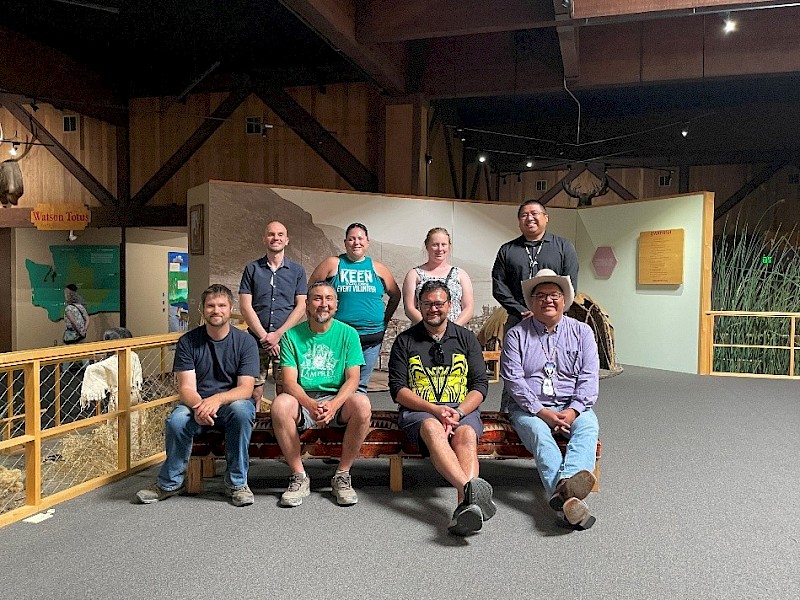
 Ngāi Tahu whānau, Yakama Nation members, and researchers at the Yakama Nation Cultural Centre. Photo by Hokonui Rūnanga.Hokonui Rūnanga owes a lot to our research partners. We have collaborated with multiple organisations on kanakana research, including:
- Cawthron Institute
- Biological Heritage Science Challenge
- Plant & Food Research
- University of Canterbury
- Kitson Consulting
- NIWA
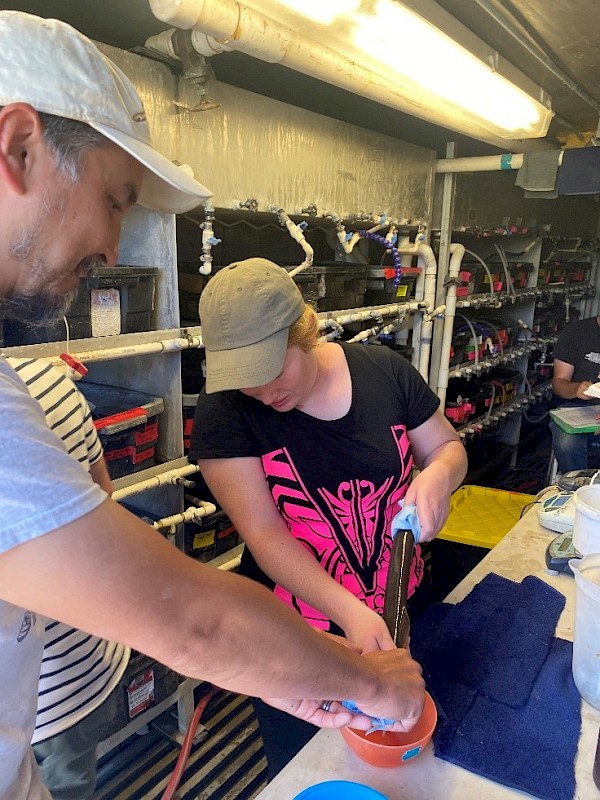
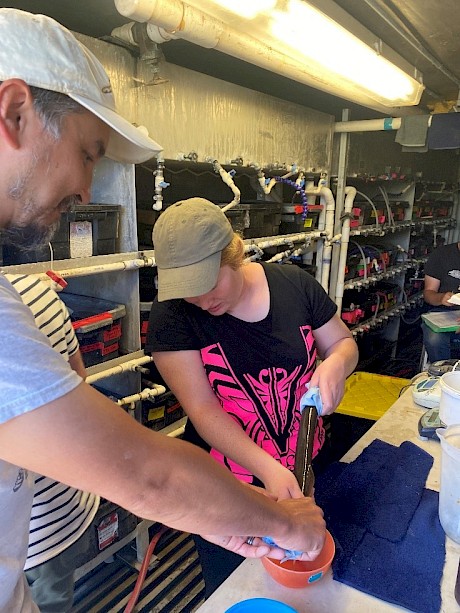 Ralph Lapman (Biologist for Yakama Nation Fisheries) teaching Mollie Lyders (Hokonui) how to strip a Pacific Lamprey in the USA. Photo by Hokonui Rūnanga.Te Wai Māori Trust
- Contact Energy.
We are proud to be associated with these partners and continue to work with them through Taonga Research.
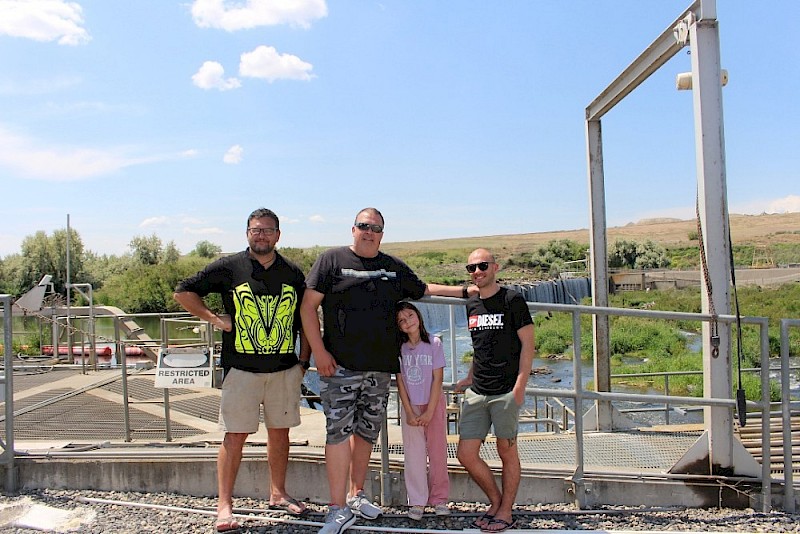
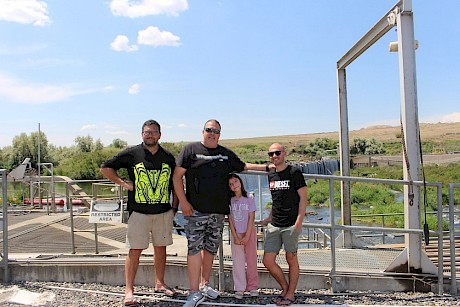 Riki Parata and Matt Wylie (Ngāi Tahu) with Aaron Jackson and daughter (Umatilla Nation) at the Umatilla River Damn and lamprey passage. Photo by Hokonui Rūnanga.Biological Heritage Science Challenge
The Biological Heritage Science Challenge Freshwater for our Taonga interweaves themes of improved restoration outcomes and enhanced mauri/health of Tuna and Kanakana/Piharau. There are three aligned research areas, with Hokonui Rūnanga and Kitson Consulting hosting one of the areas, The voice of taonga species, using an indicator species (kanakana/piharau) for reversing the decline of mahinga kai.
This project seeks to connect current freshwater research and mahi conducted by Hokonui Rūnanga and others with interests in kanakana to provide a pathway to future research, monitoring, and restoration of Mahika kai kanakana.
Read about the National Science Challenge: Freshwater for our Taonga.
As part of this project, we were able to have three Ngāi Tahu whānau travelling to the USA in 2023 to learn from Native American tribes their techniques for restoration of the Pacific Lamprey. Read about our cultural exchange with indigenous grops along the Columbia River.
Cawthron – Emerging Aquatic Diseases
Emerging Aquatic Diseases is a 5-year collaborative research programme funded by MBIE Endeavour and led by Cawthron. The programme addresses emerging aquatic diseases in wildlife, fisheries, and aquaculture and will tackle long-standing challenges associated with unresolved disease investigations.
The outcomes of the programme will be fit-for-purpose diagnostics implemented by government and industry for timely and effective mitigation and response and heightened engagement with communities and iwi. We aim to protect our aquatic biodiversity, taonga, endangered species, and industries to elevate community well-being.
Find out more about the Cawthron Emerging Aquatic Diseases Programme.
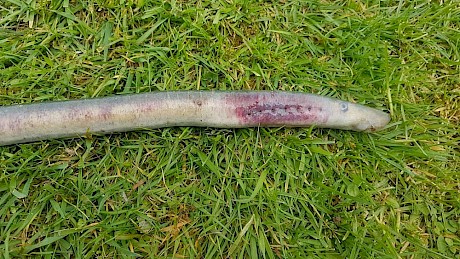 Lamprey Reddening Syndrome (LRS) found on kanakana. Photo by Hokonui Rūnanga.Kanakana case study: Lamprey reddening syndrome inception wānanga
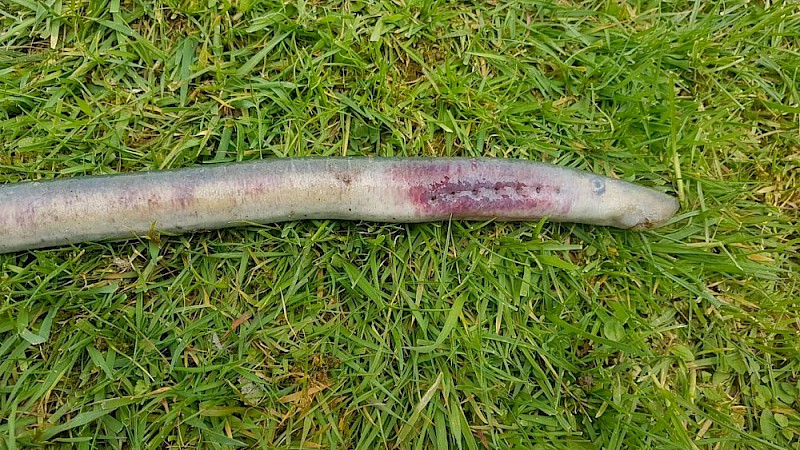
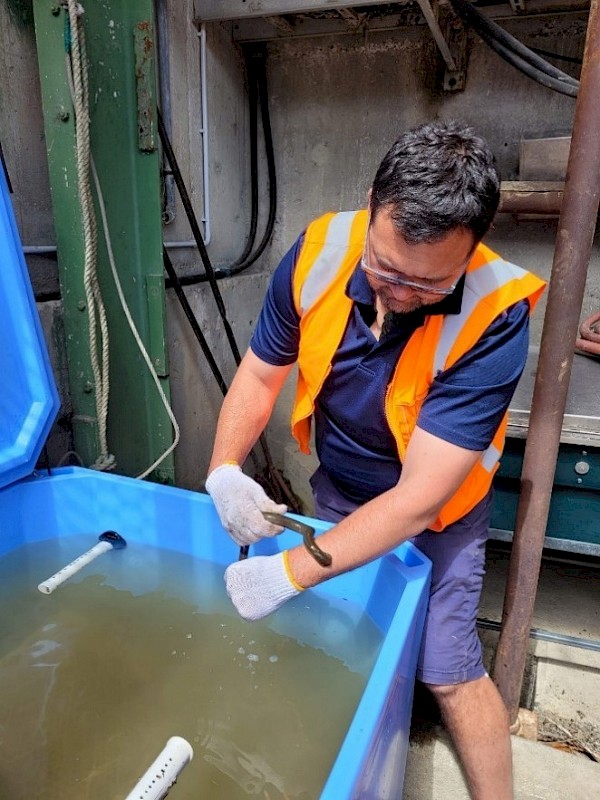 Riki Parata with kanakana at the Mataura Falls. Photo: James Butler.In New Zealand, Geotria australis (kanakana) are susceptible to “lamprey reddening syndrome” which typically causes skin abnormalities around the gills, bodies and fins and has been associated with morbidity and mortality of lamprey returning to freshwater to spawn. T Despite disease investigations into mortality events and recent research efforts, the cause of lamprey reddening syndrome remains unknown.
This was first brought to attention by Rewi Anglem from the Hokonui Rūnanga in 2011. Read the RNZ article: Māori concern at disease affecting kanakana.
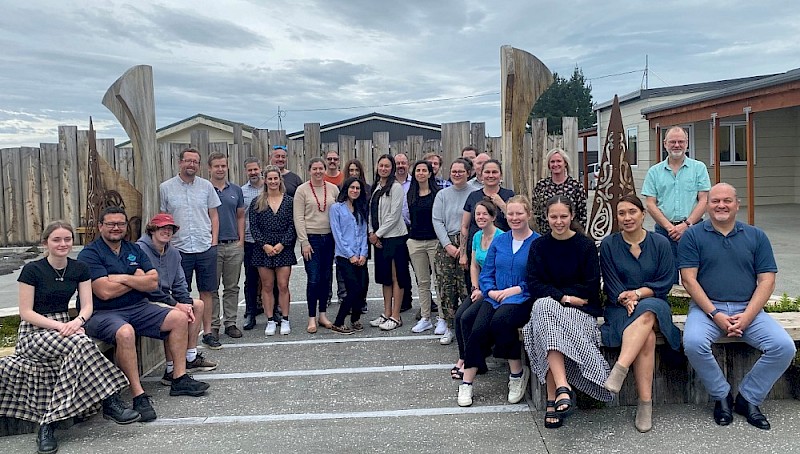 Lamprey Reddening Syndrome Wānanga held at the Hokonui Rūnanga. Photo: James Butler.On 21-22 November 2023, 27 knowledge holders from 10 groups across iwi, local and national government and science came together to learn from each other about lamprey reddening syndrome. Participants included representatives from the organisations responsible for aquatic disease surveillance including the Ministry for Primary Industries, and the Department of Conservation.
The wānanga was hosted by Hokonui Rūnanga at their headquarters in Gore, Murihiku, with support from the Department of Conservation. The aim of the wānanga was to build understanding about lamprey reddening syndrome, and to design an improved surveillance, reporting and response system. Together, participants synthesised the wide range of suggestions into new tangible projects or actions.
Te Wai-Māori Trust
Te Wai Māori Trust have been a long supporter of the Hokonui Rūnanga. In 2023, Hokonui Rūnanga received Wai Ora funding as part of their mission to protect kanakana/piharau in their rohe from Te Wai Māori Trust.
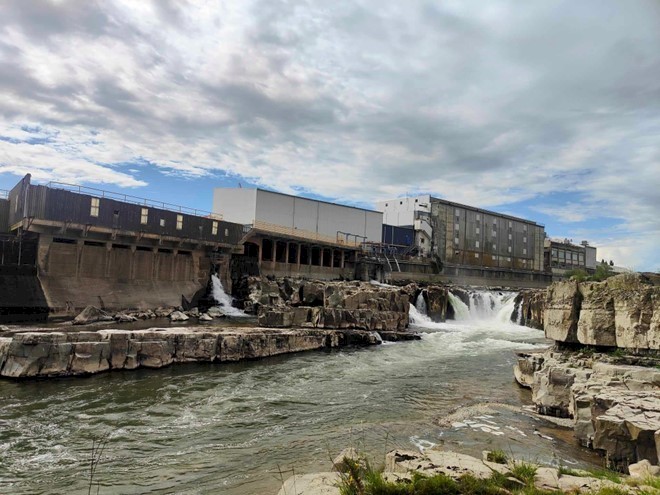 Mataura Falls and Mataura Freezing Works.The Mataura Falls on the Mataura River is renowned for its abundance of kanakana/piharau. This important mahinga kai has survived against the odds. In the late 19th century it was drastically altered when the Mataura Paper Mill and the Mataura Freezing Works were established on opposite sides of the river.
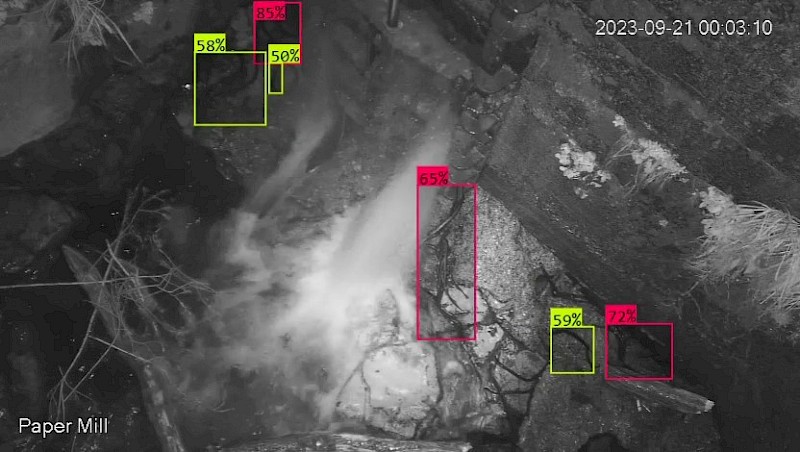
Hokonui Rūnanga monitor kanakana annually. With the support of the Wai Ora Fund, they plan to utilise AI software alongside their cameras at Mataura Falls to help detect when kanakana migration starts and ends. It will also enable monitoring of individual features from each kanakana, including the presence/absence of kanakana/piharau (lamprey) reddening syndrome LRS, which will add real value to their wider research programme.