Hokonui Rūnanga Register
  • About us
    • Who we are
    • Murihiku Regeneration
    • Property assets
    • Find us
    • Job vacancies
  • Our history
    • Our whakapapa - a deep connection to this place
    • Wai and Whakapapa
    • The Battle of Waitaramea
    • Poupoutunoa and Kauwaewhakatoro
    • Two Rivers: Mataura (Mata Ura) and Clutha (Mata Au)
  • Events & key dates
    • Energy, Infrastructure and Opportunities Wānanga 2026
    • Energy and Innovation Wānanga 2024
    • Energy and Innovation Expo 2023
    • Science and Innovation Wānanga 2021
    • He Ao Hou - New Futures Murihiku Teacher PD Day
  • Education & training
    • Education - Hokonui Rohe Team
    • Te Ara Aukati Kore - Education, Training, and Capability
    • Have your say!
  • Environment
    • Kaupapa Taiao - Hokonui Floriculture
    • Taonga Research
    • Southern Ocean - Murihiku ki te Tonga
    • Energy Transition Programme
    • Te Tapu o Tāne
    • Our Kaimahi - Staff
  • Health & wellbeing
    • Whānau Ora Navigators
    • Community youth worker and advocacy service
    • Hokonui Community-Led Health
    • Kaumatua Health Days
    • Te Kakano - Nurse-led Clinics
    • Our Kaimahi - Staff
    • Hokonui Takiwā Health and Wellbeing Village of Support
    • Referral form
    • COVID-19
  • News
    • Pānui updates
    • Photos
  • Contact us
    • Register
  1. Home
  2. News

News

Rereka ki te Toka - Ross Sea expedition

Nā Dr Regina Eisert rātou ko Dr Matiu Prebble, ko Dr Gerard O’Regan.

This past summer, three Ngāi Tahu expeditions followed the path of the birds and whales to the Southern Ocean, reigniting a long-standing interest in one of the most enigmatic regions of the world’s oceans. One of the three expeditions was the inaugural Murihiku ki Te Tonga expedition under the leadership of Riki Nicholas. In partnership with Christchurch-based company Heritage Expeditions, the team from Murihiku Regeneration travelled to the Subantarctic Islands and all the way south to where the Southern Ocean meets the Ross Ice Shelf. The article also describes an expedition to Campbell Island together with the NZDF and the work of Kāi Tahu scholars on the Auckland Islands.
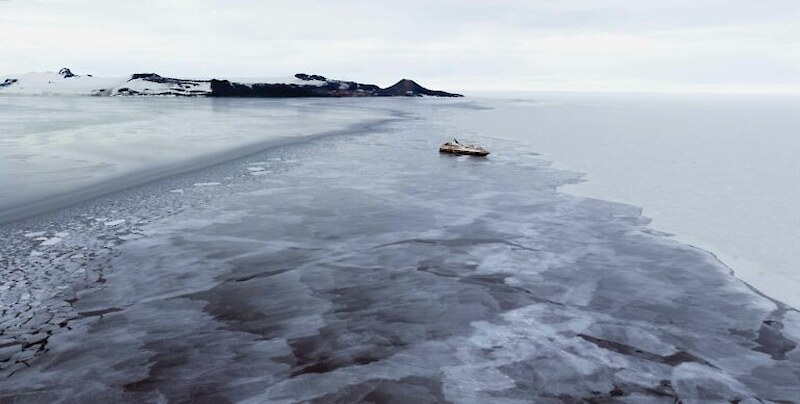
The Heritage Adventurer in front of Ross Island in McMurdo Sound, Antarctica. Photograph: Colin Aitcheson.The Heritage Adventurer in front of Ross Island in McMurdo Sound, Antarctica. Photograph: Colin Aitcheson.
Follow the birds
This past summer, three Ngāi Tahu expeditions followed the path of the birds and whales to the Southern Ocean, reigniting a long-standing interest in one of the most enigmatic regions of the world’s oceans. Gazing south, a vast expanse of water links Bluff to the great ice barriers guarding Te Tiri o Te Moana, the Antarctic Continent. On the way lie the Subantarctic Islands, cool and damp, sparse on top but with rich animal and plant life about the coastal edges and recognised as World Heritage Sites by UNESCO. These remote islands recall what Te Waipounamu might have looked like before humans first arrived. Pressing on, we arrive in the Ross Sea region. Seabirds and whales come here all the way from New Zealand, Australia, and as far as Tonga to feed under the midnight sun during the short polar summer, when the Southern Ocean teems with prey.

Explorers, Hunters and Scholars
The teams who travelled south followed the steps of early explorers. Ground-breaking work led by Ngāi Tahu archaeologist Atholl Anderson and Gerard O’Regan, in the late 1990s established Maukahuka – the Auckland Islands as the southern point of the Polynesian Triangle. About 700 years ago, Māori established camps on Enderby Island. Atholl found that they hunted seals and nesting seabirds and collected shellfish, but from his initial findings suggested that they did not stay long.


A few hundred years later, the promise of profit brought whaling ships from the Northern Hemisphere to hunt parāoa (sperm whales) and tohorā (baleen whales) all the way to Antarctica. When first visited by Pākehā, the sub-Antarctic Islands or in the Southern Ocean revealed no traces of Polynesian presence. On 24 January 1895, a Kāi Tahu man from Rakiura, William Timaru Joss, visited the Antarctic continent at Cape Adare as crew on the Norwegian Whaler Antarctic. This was one of the very first landings on the great southern continent and is considered the beginning of the “Heroic Era” of Antarctic exploration. One of their shipmates was world-famous explorer Carsten Borchgrevink, who four years later became the first human to overwinter in the Antarctic.Te Umu Tawhito salvage excavation at Sandy Bay showing the marker points used for the 3D mapping of the positions of the hangi stones. Photograph: T. Ladefoged.Te Umu Tawhito salvage excavation at Sandy Bay showing the marker points used for the 3D mapping of the positions of the hangi stones. Photograph: T. Ladefoged.
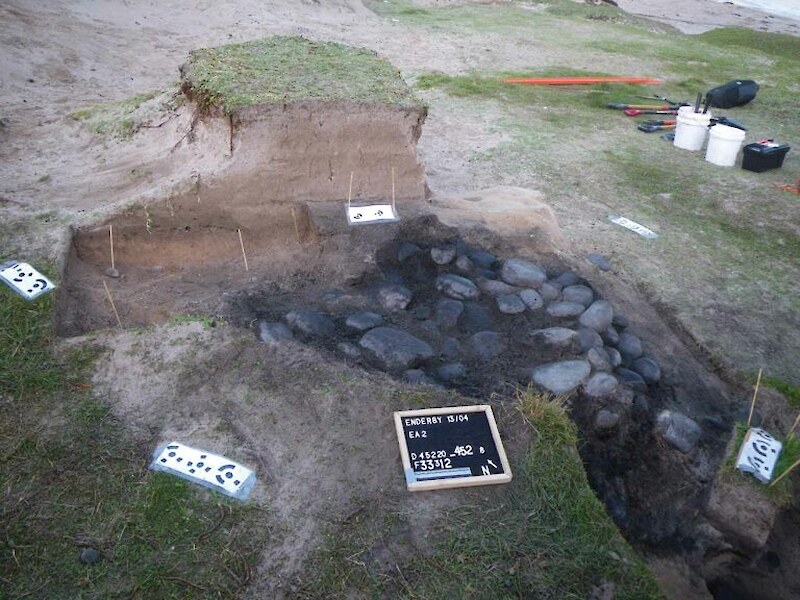
In April 2023, Kāi Tahu scholars Dr Matiu Prebble from the University of Canterbury (Kāi Tahu – Wairewa) and Dr Gerard O’Regan from Tūhura Otago Museum (Kāi Tahu – Moeraki) travelled to Enderby Island on board the yacht Evohe on a two-day crossing from Invercargill, leading a team to investigate how early Māori engaged in shaping the natural environment.

Using the latest precision surveying equipment, they were able to map important archaeological sites in 3D. Excavations revealed more extensive occupation that was previously recognised and recovered the entirety of a large umu. “Normally archaeologists just count hāngī or umu rocks and then put them to the side,” says Gerard. “But this is the southern-most umu – earth oven – excavated in the whole of Polynesia so we decided to bring back every stone.A red chert flake excavated from Sandy Bay, possibly from a source from Te Wai Pounamu. Photograph: T. Ladefoged.A red chert flake excavated from Sandy Bay, possibly from a source from Te Wai Pounamu. Photograph: T. Ladefoged.
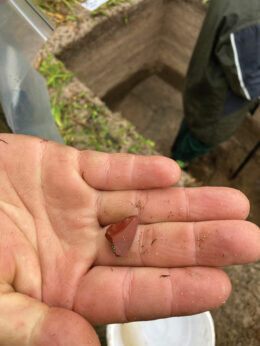
Otherwise, they would have eventually rolled down the beach due to coastal erosion and sea lion ‘trampling’. We had to decide what to do on the spot and, so, it was important have Murihiku rūnaka representatives Anthony Fowler and Rewi Davis there giving confidence to our thinking.”

Based in part from the expedition yacht Evohe, and in part from the DOC huts on Enderby Island, this two-week project has been the most extensive archaeological excavation undertaken so far on Maukahuka. Marie Dunn, currently an archaeology intern through Te Rūnanga o Ngāi Tahu, got to work with archaeologists, Professors Thegn Ladefoged and Simon Holdaway from the University of Auckland, world leaders in their fields, experiencing their approach to excavating and recording absolutely everything bigger than 2cm. Kāi Tahu project volunteer Teige Sherwood-O’Regan helped Matiu with collecting core samples to study the wider landscape.
“It is special to be doing this work down there, but it’s even more special when you see our next generation of kaimahi building their experience of the motu,” says Matiu.

The laboratory analyses on the recovered samples are continuing, with the help of Kāi Tahu intern, George Young, but already the results suggest that more extensive excavation is warranted. Matiu says, “From this project we’ll get some important insights into how our tīpuna interacted with local wildlife and made large scale as well as subtle environmental interventions that enabled them to possibly maintain an extended occupation, greater than previously thought. The evidence for re-use of stone and bone artefacts and clothing manufacture is critical to this picture.”Emperor Penguins. Photograph: Dr Regina Eisert.Emperor Penguins. Photograph: Dr Regina Eisert.
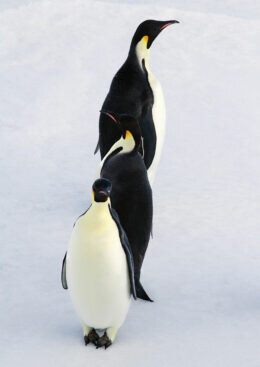
From our findings we can already work towards developing better strategies with DOC for protecting sites and artefacts from erosion and the encroachment of endangered rāpoka (New Zealand sea lions) that have found a refuge on the islands. “More importantly, we need to find ways of regularly returning to the island, allowing more Kāi Tahu to not only experience the wildlife, but also to understand the global importance of our cultural heritage.”

Te Rūnaka o Awarua whānau member, Bob Bowen, and his team, Vanessa Horwell (Te Anau) and Margaret Christiansen (Bluff), travelled south on a much larger
ship. Together with scientists, conservation staff, and 11 young people and five teachers sponsored by the Blake Foundation, he boarded the HMNZS Canterbury in Bluff to visit Moutere Ihupuku-Campbell Island that lies another 300km south-east of Maukahuka. Having joined the Navy straight out of school, Bob felt right at home onboard the ship.

The priorities for the Kāi Tahu team included supporting DOC and researchers visiting the island, as well as represent mana moana and mana whenua for Kāi Tahu. They helped unload gear and remove exotic weeds and completed preliminary monitoring of rāpoka, toroa (albatross), and penguins, of which there were at least six species on the island. But almost as soon as they arrived, disaster struck in the form of Cyclone Gabrielle, urgently calling the Navy away to help in the North Island and cutting short what was originally a 10-day trip. All the gear that had just been unloaded was loaded straight back onto the ship. Nevertheless, having seen the beauty of the region, Bob and his team are keen to find a way to return south.Dr Gerard O’Regan and Dr Matiu Prebble on board the Evohe before departure at Bluff. Photograph: A. DuksDr Gerard O’Regan and Dr Matiu Prebble on board the Evohe before departure at Bluff. Photograph: A. Duks
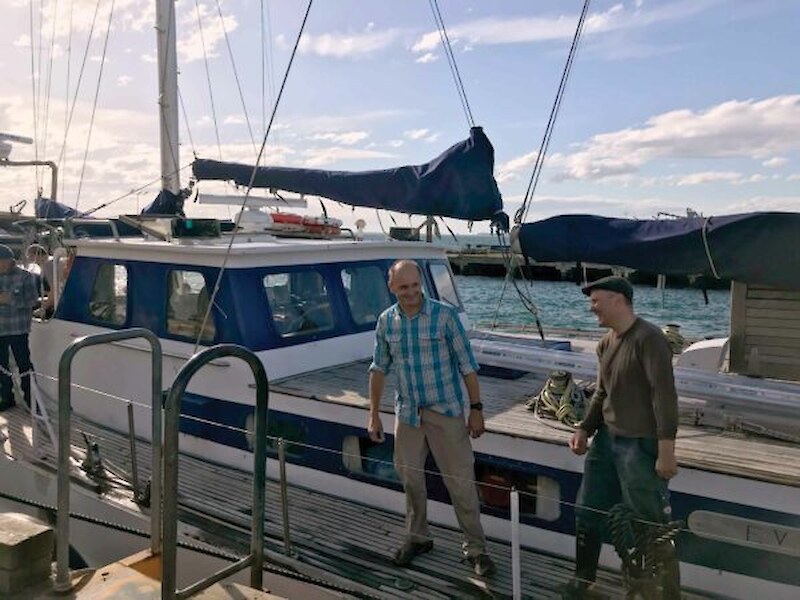
Access to the Subantarctic Islands and the Ross Dependency has historically been difficult. While the New Zealand Defence Force is keen to partner with Kāi Tahu, their core duties override support of research and conservation.

The voyage to the Subantarctic Islands is a non-trivial undertaking in terms of cost and risk, and going to the Ross Sea, another 2,000 km south from Maukahuka across some of the roughest seas on the planet, is another challenge altogether. However, a new initiative led by Murihiku Regeneration aims to establish access for Ngāi Tahu and support kaitiakitaka and rangatirataka of the region.The Heritage Adventurer heading south into the Ross Sea. Photograph: Colin Aitcheson.The Heritage Adventurer heading south into the Ross Sea. Photograph: Colin Aitcheson.
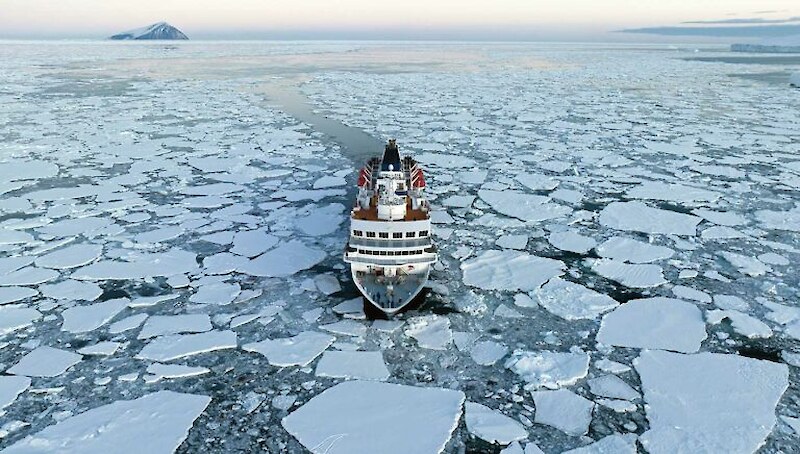
Murihiku ki Te Tonga – a new Research and Monitoring Programme
Murihiku Regeneration was established in 2020 by kā southern rūnaka of Kāi Tahu as a long-term inter-generational programme supporting social, economic, cultural, and environmental well-being. Recognising the close connection between Murihiku and Te Moana-tāpokopoko-a-Tāwhaki, it became clear that Murihiku Regeneration needed its own research and monitoring capability, including reliable access to the entire Ross Sea sector from Fiordland to Antarctica.


To this end, Murihiku Regeneration approached Christchurch-based company Heritage Expeditions, who have been running nature cruises in this part of the world for several decades. Both partners quickly realised the synergies created by combining scientific research and sustainable tourism, and the inaugural Murihiku ki Te Tonga research expedition to the Subantarctic and the Ross Sea left Bluff on board the stately MS Heritage Adventurer on 3 February this year.

The journey south had particular significance for the leader of the Murihiku team, Riki Nicholas (Ngāi Tahu, Tainui, Cook Island Māori), who comes from a long line of seafarers.Paikea (humpback whale). Photograph Supplied: Dr Regina Eisert.Paikea (humpback whale). Photograph Supplied: Dr Regina Eisert.
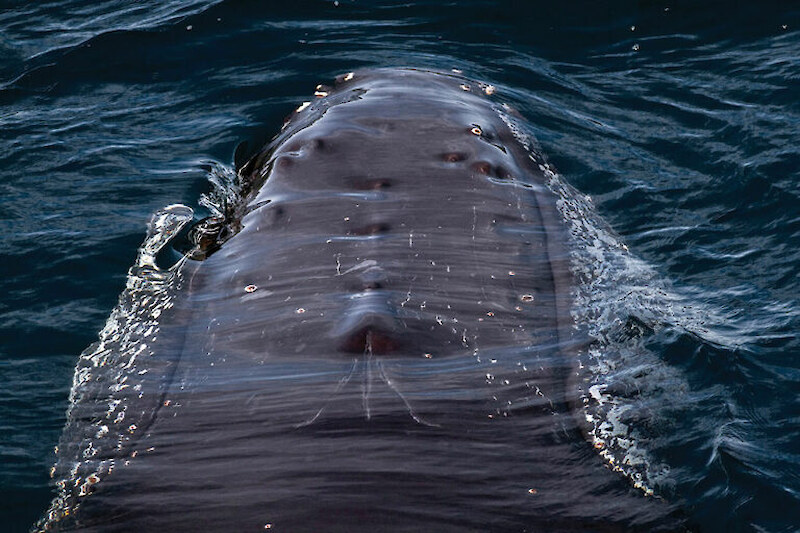
On this expedition, he is retracing voyages made by his relatives from Rakiura, William Timaru Joss and his brother Walter Douglas Joss, who helped rescue the survivors of the General Grant wrecked at Maukahuka in 1866.
From Bluff, the team made their way south, calling at Tini Heke/Snares Islands, Maukahuka, Macquarie Island, and towards the Balleny Islands south of the Antarctic Circle.

This forbidding archipelago just off the coast of Antarctica is one of the great hot spots for marine life in the Southern Ocean and part of the Ross Sea region Marine Protected Area (MPA). Right on cue, over a seamount just north of the Balleny Islands, the ship encountered paikea (humpback whales) that surrounded the ship, splashing and diving and showing their great black backs covered in barnacles.King penguins and juvenile ihi koropuku (elephant seals) at Macquarie Island. Photograph Colin Aitcheson.King penguins and juvenile ihi koropuku (elephant seals) at Macquarie Island. Photograph Colin Aitcheson.
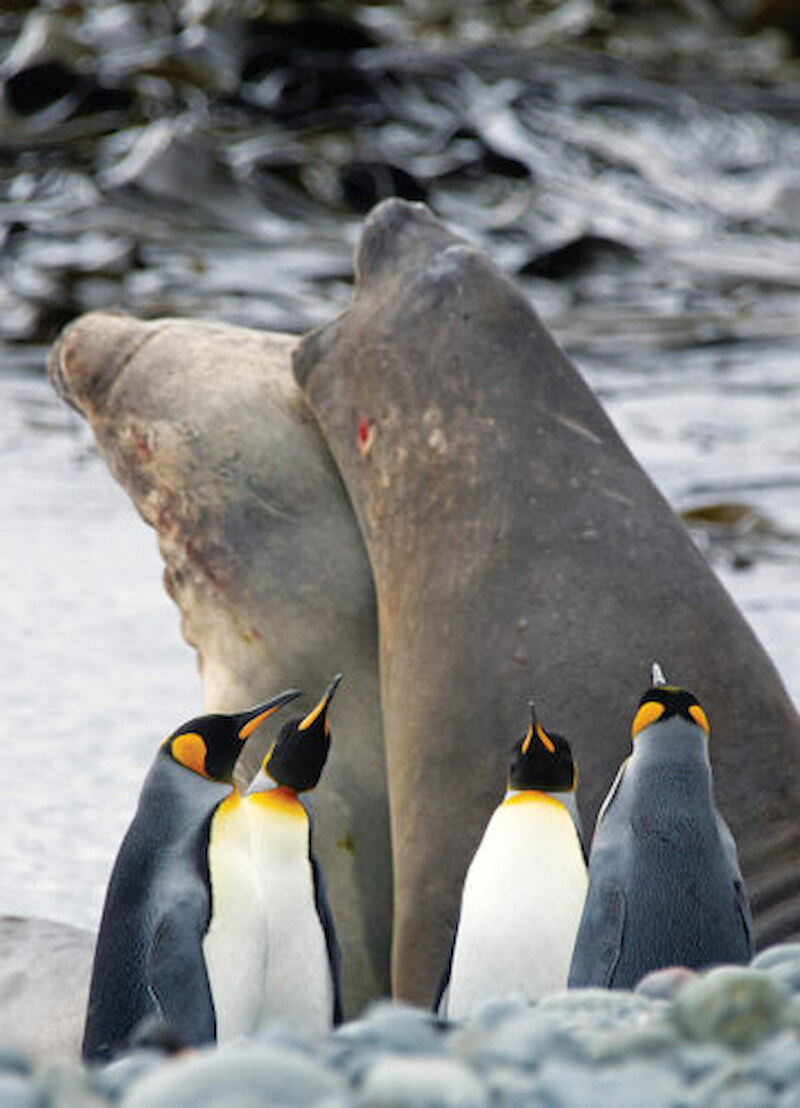
Two parāoa remained aloof and carried on feeding without paying heed to the ship. The big bull males may have come from the coasts of southern New Zealand to hunt in the Ross Sea.

The Murihiku team of Riki Nicholas, Regina Eisert and Colin Aitchinson, first landed on the coast of Antarctica proper at Cape Adare, the same place the first Kāi Tahu in Antarctica visited in 1895 and where Carsten Borchgrevink’s hut still stands. A desolate sandy spit dominated by steep cliffs, Cape Adare is home to Adélie penguins and the skuas and popoiangore (leopard seals) that hunt them. The wildlife, curious but undisturbed, watched their human manuhiri without fear.

Carrying on into the Ross Sea, the ship passes numerous icebergs. At this latitude, the sun no longer sets, and the team stays awake to admire the beauty of ocean, ice, and sky.Killer whale in the sea ice. Photograph: Colin Aitheson.Killer whale in the sea ice. Photograph: Colin Aitheson.
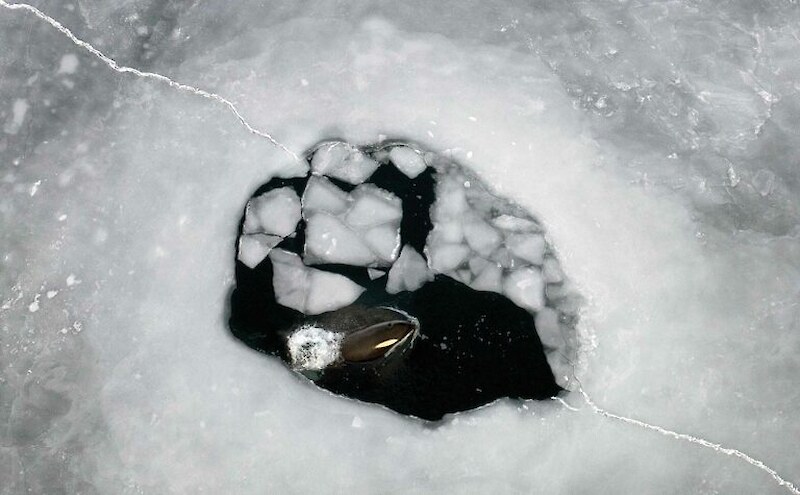
At the furthest point south, just around the corner from Scott Base and its Pouwhenua, the ship parks up overnight at a sea ice berth surrounded by emperor penguins and killer whales that have come to inspect our strange object. At Hut Point, the team picks up their fourth member, veteran film-maker Anthony “Antz” Powell.

The team also kept an eye out for tītī, true to the motto, “Murihiku Tītī a Kāi, Tītī a Mānawa”. Tītī nesting in Murihiku takes long trips to sea to provision their young (up to two weeks) and fly as far as the Southern Ocean. The team spotted large flocks of tītī in the Ross Sea region south of 60 deg S, emphasising the connection of Murihiku to the Southern Ocean and the Ross Sea region’s MPA.Colin Aitcheson from the Murihiku team deploys a drone at Cape Adare. Photograph Supplied: Dr Regina Eisert.Colin Aitcheson from the Murihiku team deploys a drone at Cape Adare. Photograph Supplied: Dr Regina Eisert.
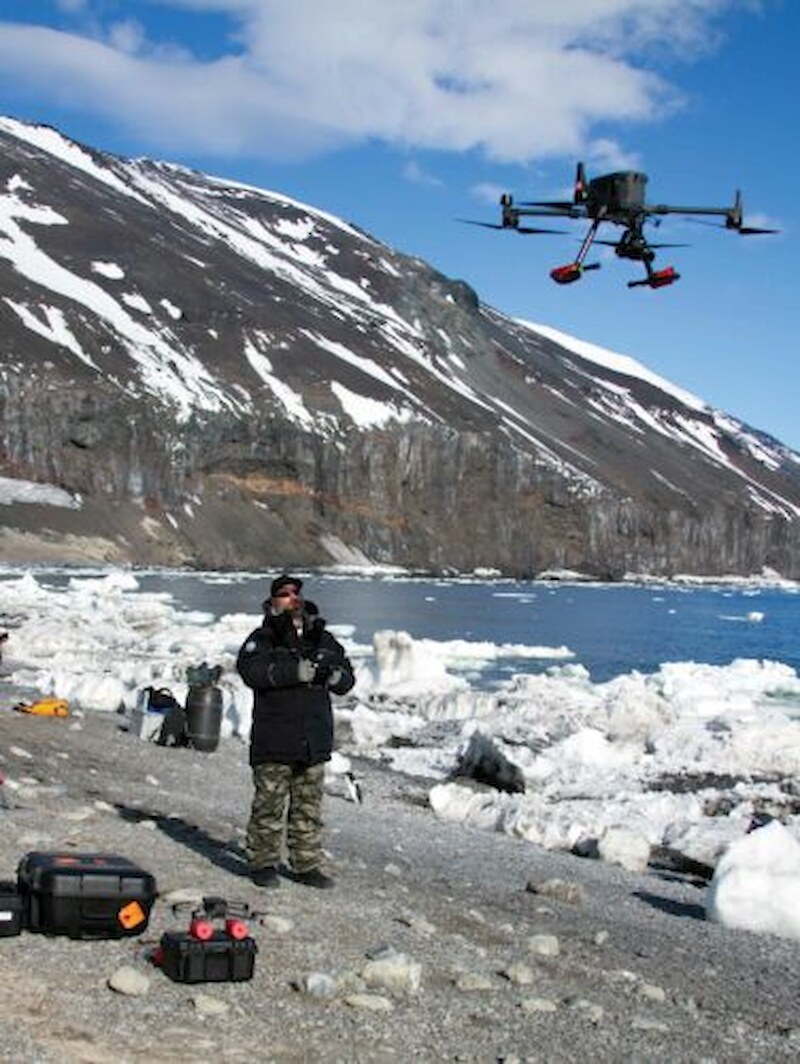
As one of the scientific objectives of this expedition, the team deployed underwater and aerial drones to observe and record keystone species, including whales and seals. As high-level predators and mega consumers, marine mammals are powerful indicators of ecosystem status and monitoring them provides essential information about natural variations and potential change or disruption in things such as climate. The data and information collected on this first expedition provides the basis for developing effective research and monitoring of the region, and better understanding of the effects of fishing and climate change.

Kotahitaka – Partnership for Cultural Heritage and Biological Conservation

It’s clear that what happens in the Ross Sea Sector south of Aotearoa has important consequences for the climate, productivity, marine resources, and wellbeing of Te Waipounamu.
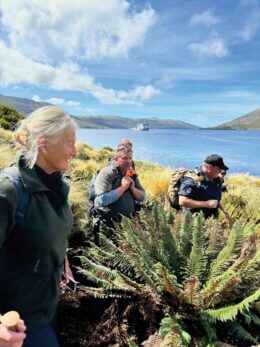
Margaret Christiansen, Bob Bowen and Lt Commander Kerry Driver on Moutere Ihupuku-Campbell Island. Photograph Supplied: Dr Regina Eisert.Margaret Christiansen, Bob Bowen and Lt Commander Kerry Driver on Moutere Ihupuku-Campbell Island. Photograph Supplied: Dr Regina Eisert.
Effective stewardship of the environment, cultural heritage, including historic sites, is only possible based on knowledge and reliable information. The growing Kāi Tahu interest in the Ross Sea Sector sets an important precedent for joint management of the region together with DOC. Key to these efforts are reliable access and logistics support for Kāi Tahu researchers, conservationists, students, and collaborators in the Ross Sea Sector.

As demonstrated by the inaugural Murihiku ki Te Toka expedition, fresh approaches such as the partnership with Heritage Expeditions provide a cost-effective solution. While tourism can be antithetical to conservation, the controlled, sustainable sharing of natural taoka can turn visitors into life-long ambassadors for conservation and stewardship.

However, it is essential that Kāi Tahu play an active role in managing the Ross Sea Sector to ensure decisions are evidence-based and aligned with Kāi Tahu values. As this last summer has shown, Kāi Tahu are once again following the birds and the whales, kā tapuwae o kā tīpuna – the footsteps of the ancestors to the Great Southern Ocean.
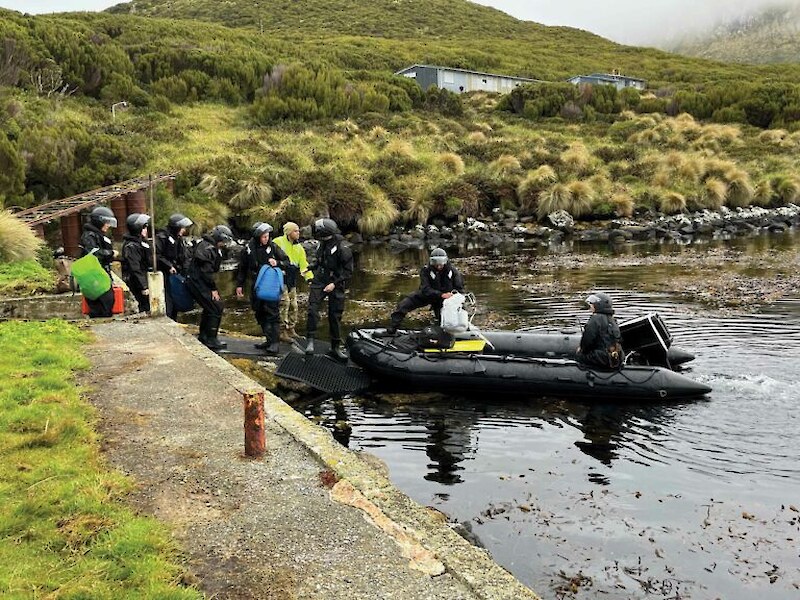
Loading up to return back to HMNZS Canterbury. Photograph Supplied: Dr Regina Eisert.Loading up to return back to HMNZS Canterbury. Photograph Supplied: Dr Regina Eisert.

Original article on the Te Rūnanga o Ngāi Tahu website

Posted: 18 July 2023
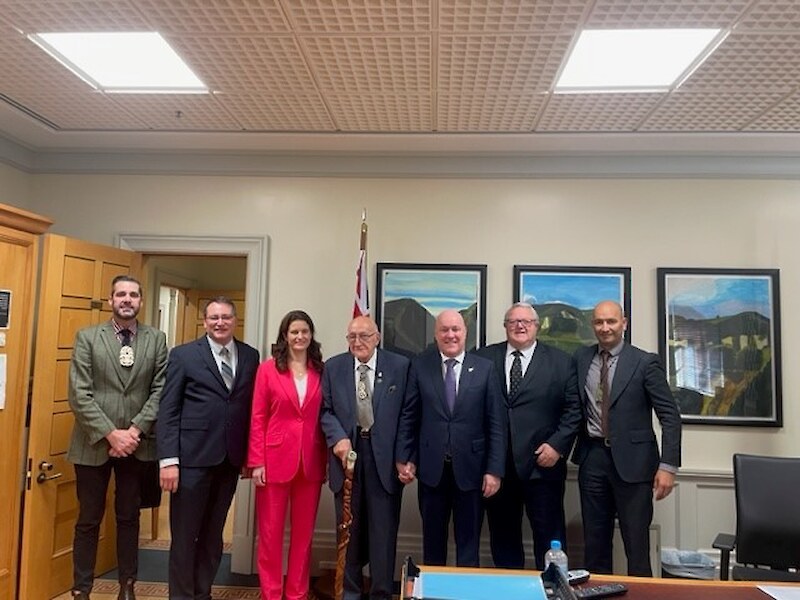
Murihiku Upoko meet National party leader, Christoper Luxon, to discuss priorities

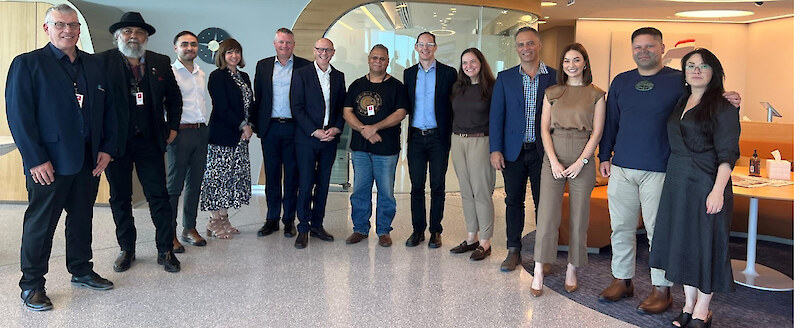
Tā Tipene O’Regan, on behalf of Murihiku Upoko, met with the Leader of the Opposition, Christopher Luxon MP, and some of his senior colleagues at his parliamentary offices in Wellington on 31 May. Dr Michael Stevens, also from Te Rūnaka o Awarua, supported Tā Tipene at this hui, which canvassed a range of challenges and opportunities facing Murihiku and the nation.

For the National Party, Nicolas Willis MP as Deputy Leader, Dr Shane Reti MP, Gerry Brownlee MP, and Tama Potaka MP, were also in attendance.

This hui built on a series of warm interactions with National Party MPs in recent months; most recently at the Energy and Innovation Wānanga held in Invercargill where an assortment of MPs attended to better understand the region’s strategic priorities.

In outlining a brief history of modern Ngai Tahu to Chris Luxon, Tā Tipene reflected on the tribe’s “political agnosticism” and depth of connection with New Zealand’s main political parties. During his decades representing Te Rūnanga o Ngai Tahu and Te Rūnaka o Awarua, Tā Tipene recalled that it has always been possible to identify shared aspirations with each side of the House, and work with them in mutually beneficial ways.

“It’s important that we - all of us - seek to be constructive, and look for areas of alignment and cooperation. That requires parliamentarians to avoid ‘dog-whistle’ politics, especially in election year. And it requires iwi and hapū to be ambitious for our communities as well as the wider nation we are part of. That inclusive nation-building is very important to Ngai Tahu, and is pivotal, I think, to building a better future for all people who call Aotearoa New Zealand home,” said Tā Tipene.

Dr Stevens highlighted an array of Ngai Tahu individuals and whānau with deep historical connections to the National Party, and even its antecedents. He drew attention, in turn, to a bundle of interrelated initiatives for future collaboration which could extend these underlying relationships.

“There are some important arenas where we can work closely together to enhance not just Ngāi Tahu whānui, and Te Waipounamu, but New Zealand as a whole. Just as our histories are entangled, our futures are interdependent. Increasingly so. Our sincere view is that a prosperous and robust Ngāi Tahu makes for a stronger country,” said Dr Stevens.

An update was also provided on Murihiku Regeneration’s work programme, and the need emphasised for energy transition in southern New Zealand to both benefit the region and be in the national interest: a message clearly received from participants during the recent Energy and Innovation Wānanga.

Posted: 2 June 2023

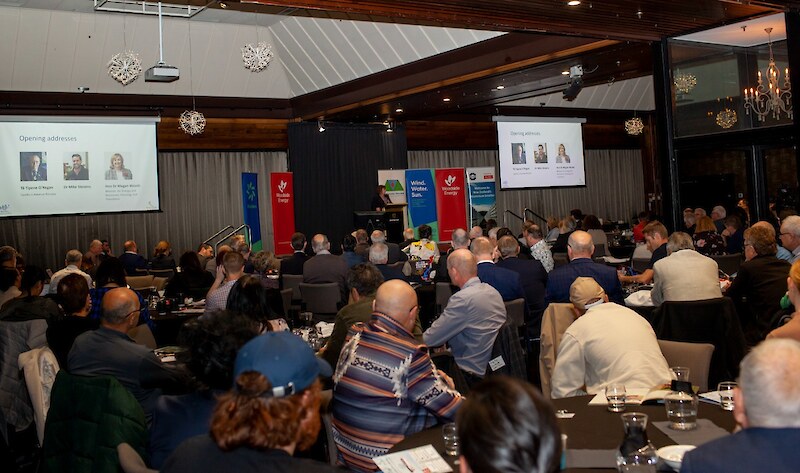
Engaging and future-focused kōrero at the 2023 Energy and Innovation Wānanga -23 May

It was Tā Tipene O ’Reagan who set the tone for the day when he said in his opening address, “We need to think differently, we need to dream differently, tell me what else we are going to do.”

Ranging from a global session on the importance of international partnerships to a kōrero around regional infrastructure and innovation, today’s discussions provided the opportunity for the Murihiku community to hear from industry experts and reflect upon how they can respond proactively to the challenges of our time.

Minister Megan Woods then went on to announce the government’s commitment to help Murihiku transition to a more resilient, sustainable economy. She says, “It is the local Rūnanga who have come together and been instrumental in ensuring we have clear plans for the future. It is the Murihiku Rūnanga who have really led from the front.”

Hon Megan Woods on Energy transition, Just Transitions and Government policyHon Megan Woods on Energy transition, Just Transitions and Government policy

Well over 250 people turned up to engage, participate and think about the future opportunities for the region and community. Many more connected in on live stream and social media. The response to the first day has been overwhelmingly positive.

Day one had a mix of international, national level, regional and local experts covering a focused range of topics about the potential future for Murihiku-Southland.

“Is about our whanau, our hapū, Iwi, Pacifica, and our whole community coming together to help direct how our future can be. It is about action,” was the clear mesage by Terry Nicholas from Hokonui Rūnanga and Murihiku Regeneration.

Day 2 will focus on regional priorities, plans and key updates from Rio Tinto on the future of the Tiwai Smelter, and updates on new projects including Southern Green Hydrogen and Southland Aquaculture porjects.

Whether you were on the ground in Waihōpai or tuning in from home, the Murihiku Regeneration team want your feedback and for you to have your say. Please let us know what you think and where you want us to focus our mahi.

Posted: 24 May 2023

2023 Energy and Innovation Expo Livestream Access Guide

Want to be a part of the 2023 Energy and Innovation Wānanga but can’t make it down to Waihōpai?

Thanks to our event livestream, you can stay up to date with everything taking place at the wānanga from the comfort of your couch.

Check out our livestream access guide and event program below. There is also an additional page on our website with just the links for you to look at.

2023 Energy and Innovation Expo Livestream Access Guide

Welcome to the livestream access guide for the 2023 Energy and Innovation Expo! We are excited to bring you the best seat in the house. Here’s everything you need to know to access and enjoy the livestream experience:

Step 1: Check out the below program and set reminders to ensure you don’t miss a moment of the event. Additionally, set alarms on your devices to alert you before the livestream starts. This way, you’ll be ready and tuned in at the right time.

Step 2: Click on the provided link (see below) of the session you would like to attend, and you should be taken directly to the correct webpage.

Step 3: Sit back, relax, and immerse yourself in the kōrero of your chosen session.

Remember to have a stable internet connection throughout the livestream for the best viewing experience. If you encounter any technical difficulties or have questions, our support team will be available to assist you via the provided contact information on the event website.

We hope you have an amazing time at our 2023 Energy and Innovation Expo through our livestream.

Thank you for joining us and being a part of this awesome opportunity to turn strategy into action.

Livestream Sessions Program

Tuesday 23 May 2023

Morning Session - https://vimeo.com/event/3406899

9.00am: Welcome and scene setting

  • Terry Nicholas and Mayor Nobby Clark

9.25am: Opening addresses

  • Tā Tipene O’Regan (Awarua Upoko) and Dr Mike Stevens (Awarua Rūnaka): Cohesion, alignment and national interest
  • Minister Megan Woods (Minister of Energy and Resources, and Just Transitions): Energy transition, Just Transition and Government policy

10.15am: Global Session

  • Session Chair: Dr Regina Eisert - From global to local – the importance of international partnerships
  • German Consul
  • Woodside New Energy: Jason Crusan, VP New Energy Solutions

11.10am: Empowering partnerships: government’s role in Aotearoa’s energy transition

  • Session Chair: Dean Ford, GM Economic Development and Transitions, MBIE
  • Carolyn Tremain, Chief Executive MBIE: Empowering partnerships through innovation
  • Dean Ford: Just Transition programme update

11.45am: Climate economics

  • Session Chair: Dr Mike Stevens
  • Prof David Frame: Climate economics
  • Greg Bodeker (Bodeker Scientific): Climate futures
  • Lee Chambers (GNS): Sea level rise and groundwater

Afternoon Session - https://vimeo.com/event/3406903

1.15pm: Regional infrastructure

  • Session Chair: Ross Copland, CE Te Waihanga/Infrastructure Commission
  • John Clarke, Transpower GM Grid
  • James Flannery, Contact Energy GM Strategy
  • Jason Franklin, PowerNet CE
  • Nigel Gear, South Port CE
  • Stuart Harris, Invercargill Airport

2.20pm: Social regeneration and innovation

  • Session Chair: Steph Voight, Public Sector Commissioner
  • Professor Darrin Hodgetts and Professor James Liu: Social Regeneration Plan
  • Gareth Williams, MSD GM Systems Performance: MSD analytics

3.15pm: Regional Innovation

  • Session Chair: Rod Drury

4.05pm: The importance of the Māori economy through this change

  • Session Chair: Arihia Bennett, CEO, Te Rūnanga o Ngāi Tahu
  • Mike Pohio, Chair, Ngāi Tahu Holdings Corporation

Case studies:

  • Tupara Morrison, Head of Māori Development, Air New Zealand
  • Andy Macfarlane, Director, Fonterra
  • Helen Rogers, Head of Government Relations, Kiwi Rail

4.50pm: Reflections and wrap-up

Wednesday 24 May 2023

9:00am: Morning Session - https://vimeo.com/event/3406906

9.05am: Regional Leadership Panel

  • Session Chair: Neil McAra
  • Neil McAra, Southland Chamber of Commerce, and Tom Campbell, ICC
  • Deputy Mayor

9.30am: Regional plans and priorities

  • Session Chair: Chami Abeysinghe, CE Great South
  • Bobbi Brown: Regional long-term plan
  • Steve Canny: Regional decarbonisation targets
  • Mervyn English: Energy transition issues
  • Steve Canny: Process heat project
  • Lynden Prebble: Carbon neutral farm initiatives
  • Fonterra processing initiatives

10.50am: Developers Session – existing and new

  • Session Chair: Terry Nicholas, Murihiku Regeneration
  • Southern Green Hydrogen (Woodside, Meridian, Mitsui)
  • Gabrielle Pennock, Woodside New Energy
  • Murray Hill, Meridian Energy Limited
  • Nozomu Ohiki and Jason Brown, Mitsui & Co

11.30am: NZAS: Tiwai Smelter Future

  • NZAS and Rio Tinto representatives: Chris Blenkiron, CE NZAS, Nicole Atherton, Closure Readiness General Manager, Rio Tinto, Darren Schwass, Manager Closure Readiness, NZAS
  • Awarua Rūnaka representatives: Jacqui Caine and Aimee Kaio

12.10pm: Southland Aquaculture

  • Aimee Kaio, Te Rūnanga o Ngāi Tahu

1.00pm Regional case studies: Decarbonisation

  • Session Chair: Prue Halstead, Invest South
  • Karyna Young, Yunca and EnPot
  • David Simpson: T4 and Carbon (electric vehicle fleet management)
  • Anthony Jones, CEO HWR

2.25pm: Innovation and Bluff re-imagining

  • Jane Stanton, Seriously Good Chocolate Company

2.35pm: Confirming priorities

  • MC, Mayors and Upoko

3.00pm: Closing

Posted: 19 May 2023

He Rau Kōrero - First Nations Advisory Roundtable

Nā Thomas Aerepo-Morgan i waituhi

‘Irirangi ana te tangi mai o te hau tāwhiriwhiri i tua o Kahu Ariki, ko te pakinga tai aroha i Te Rau o te Huia, ka tere i te kare o te wai ki tua whenua, ki Motu-pōhue, koia tonu, ko Awarua tai tangata tēnei, ka tau.’

Kura Wānanga | Insights

Murihiku Regeneration was presented with the opportunity to participate in the First Nations Advisory Roundtable alongside Australian Aboriginal leaders, and experts hosted by Woodside Energy in Perth. The roundtable provided a valuable opportunity to listen and share insights on climate resilience, economic sustainability for future generations through emerging opportunities in New Energy. By convening in a roundtable format, members are able to collaborate and leverage their collective expertise, resulting in amplified advocacy for their rights and exchange of ‘mātauranga’ (knowledge) and ‘rautaki’ (strategies) for preserving and promoting our cultures. By valuing and integrating this mātauranga (knowledge), we can draw attention to important causes and create a platform for raising awareness and effecting change.

In addition to the above, the diverse perspectives, cultural beliefs and practices are important when it comes to decisions around ‘New Energy’ projects, such as those being pursued by Woodside Energy. These projects often have significant impacts on our ‘whenua’ (land), people, and ‘wāhi tapu’ (cultural heritage sites). By taking into account the diverse perspectives of roundtable members, companies like Woodside can ensure that they are engaging in responsible and sustainable development practices that are culturally sensitive, respectful and align with the values of the communities it works with. Adopting a values-based approach in this context can help build trust and relationships with Indigenous communities, and lead to more effective and sustainable outcomes for all stakeholders involved.

This partnership is an example of how companies operating in the energy sector can work in partnership with Indigenous communities, in particular Murihiku Regeneration to address climate change. By building strong relationships and incorporating our authentic knowledge and practices, companies like Woodside Energy can play a vital role in the transition to a more sustainable future.

However, the task of addressing climate change is too great for any one organisation to tackle alone. My views around building resilience and adapting to the impacts of climate change requires ‘mahi tahi’ (collaboration) and partnership between diverse stakeholders. This is why Woodside Energy has recognised the importance of working in partnership with Murihiku Regeneration.

Strategic positioning is critical when developing kaupapa to engage with our communities, particularly for organisations like Woodside Energy that aim to work closely with Indigenous communities. It involves understanding the unique needs and values of our people and positioning the project in a way that aligns with our culture and aspirations as a people.

A clear and well-defined strategic position can also enable Woodside Energy to allocate resources more effectively and prioritise efforts towards areas where it can have the greatest positive impact on our people, and potentially Aotearoa, New Zealand. Ultimately, strategic positioning can help ensure that Woodside Energy’s initiatives are culturally relevant, respectful, and effective in engaging with Murihiku Regeneration and other Indigenous communities, leading to greater success and positive outcomes for all stakeholders involved.

In practice, building climate resilience for future generations involves a range of actions and kaupapa (initiatives) that can be undertaken by individuals, ‘ngā hapori whānui’ (communities), iwi organisations, and the government. These examples include:

➔ Renewable energy: Investing in and expanding the use of renewable energy sources such as solar, wind, hydro, geothermal, and biomass.

➔ Transportation: Promoting the use of low-carbon transportation options such as electric vehicles, public transportation, and active transportation modes such as biking and walking.

➔ Incorporating traditional knowledge and practices into climate resilience strategies. This may involve measures such as restoring wetlands, protecting important cultural sites, and integrating ‘Mātauranga Māori’ (Māori knowledge) into natural resource management plans.

➔ Climate education and awareness: Raising public awareness about the causes and impacts of climate change and promoting individual and collective actions to address it.

Whakarāpopototanga | Summary

In conclusion, the success of the First Nations Advisory Roundtable discussions on building climate resilience for future generations was evident in the valuable insights and perspectives shared. As we look towards a sustainable and prosperous future, it is critical that we prioritise the needs of our ‘uri whakaheke’ (future generations) and incorporate the knowledge and practices that have been passed down through generations.

We are very much at the beginning of this relationship and it is important that we take the time to establish strong foundations, understanding that the decisions we make today will impact the generations to come

Posted: 3 May 2023

Prev page
Page 14 of 42
Next page

Also in this section

Pānui updates Photos
  • News
    • Pānui updates
    • Photos

© 2026 Hokonui Rūnanga • Website by RS

Facebook
  • Home
  • About us
    • Who we are
    • Murihiku Regeneration
      • Structure and context
      • Office of Upoko
    • Property assets
    • Find us
    • Job vacancies
  • Our history
    • Our whakapapa - a deep connection to this place
    • Wai and Whakapapa
    • The Battle of Waitaramea
    • Poupoutunoa and Kauwaewhakatoro
    • Two Rivers: Mataura (Mata Ura) and Clutha (Mata Au)
      • Mata Ura - Mataura River
      • Mata Au - Clutha River
  • Events & key dates
    • Energy, Infrastructure and Opportunities Wānanga 2026
    • Energy and Innovation Wānanga 2024
    • Energy and Innovation Expo 2023
      • He Ao Hou - New Futures Murihiku 22 May
      • Live Streaming of Wānanga 23 and 24 May
      • Hosts and Key Speakers 23-24 May
      • Energy and Innovation presentations - 23 May
        • Opening Addresses
        • Global Session
        • Empowering partnerships: government's role in Aotearoa's energy transition
        • Climate Economics
        • Regional Infrastructure
        • Social regeneration and innovation
        • Regional Innovation
        • The importance of the Māori economy through this change
      • Energy and Innovation presentations - 24 May
        • Regional Leadership Panel
        • Regional Plans and Priorities
        • Southern Green Hydrogen
        • Tiwai Smelter Future
        • Southland Aquaculture
        • Regional Case Studies: Decarbonisation
        • Innovation and Bluff Re-imagining
        • Confirming Priorities: wrap-up and closing
    • Science and Innovation Wānanga 2021
    • He Ao Hou - New Futures Murihiku Teacher PD Day
  • Education & training
    • Education - Hokonui Rohe Team
    • Te Ara Aukati Kore - Education, Training, and Capability
      • Kia Tū Pathway Planning Programme
        • Kia Tū in schools
        • Kia Tū Tertiary Pathway Programme
        • Meet Your Kaiako - SIT Campus
      • Anamata Māia: Bold, Confident Futures Service
        • Our Kaimahi - Staff
      • Penapena Ā Kura: School Attendance Service
      • Te Aka Whai Mahi: Find Your Path
      • He Ao Hou: New Futures Murihiku
    • Have your say!
  • Environment
    • Kaupapa Taiao - Hokonui Floriculture
    • Taonga Research
      • Kanakana Research
      • Our research partners
    • Southern Ocean - Murihiku ki te Tonga
    • Energy Transition Programme
      • Regional Energy Action Plan - Towards 2030
      • Energy Transition Plan for Murihiku-Southland
      • Hydrogen and Green Energy
      • Tiwai Point
    • Te Tapu o Tāne
    • Our Kaimahi - Staff
  • Health & wellbeing
    • Whānau Ora Navigators
    • Community youth worker and advocacy service
    • Hokonui Community-Led Health
    • Kaumatua Health Days
    • Te Kakano - Nurse-led Clinics
    • Our Kaimahi - Staff
    • Hokonui Takiwā Health and Wellbeing Village of Support
    • Referral form
    • COVID-19
  • News
    • Pānui updates
    • Photos
  • Contact us
    • Register
  • Facebook
  • Search...