
Hokonui Rūnanga Register
  • About us
    • Who we are
    • Murihiku Regeneration
    • Property assets
    • Find us
    • Job vacancies
  • Our history
    • Our whakapapa - a deep connection to this place
    • Wai and Whakapapa
    • The Battle of Waitaramea
    • Poupoutunoa and Kauwaewhakatoro
    • Two Rivers: Mataura (Mata Ura) and Clutha (Mata Au)
  • Events & key dates
    • He Ao Hou - New Futures Murihiku Teacher PD Day
    • Energy and Innovation Wānanga 2024
    • Energy and Innovation Expo 2023
    • Science and Innovation Wānanga 2021
    • Energy, Infrastructure and Opportunities Wānanga 2026
  • Education & training
    • Education - Hokonui Rohe Team
    • Te Ara Aukati Kore - Education, Training, and Capability
    • Have your say!
  • Environment
    • Kaupapa Taiao - Hokonui Floriculture
    • Taonga Research
    • Southern Ocean - Murihiku ki te Tonga
    • Energy Transition Programme
    • Te Tapu o Tāne
    • Our Kaimahi - Staff
  • Health & wellbeing
    • Whānau Ora Navigators
    • Community youth worker and advocacy service
    • Hokonui Community-Led Health
    • Kaumatua Health Days
    • Te Kakano - Nurse-led Clinics
    • Our Kaimahi - Staff
    • Hokonui Takiwā Health and Wellbeing Village of Support
    • Referral form
    • COVID-19
  • News
    • Pānui updates
    • Photos
  • Contact us
    • Register
  1. Home
  2. News
  3. What Murihiku learned from past transformations

News article

What Murihiku learned from past transformations

Article by Louisa Steyl, re-published from Stuff.

Imagine a southern Murihiku that uses the region’s natural resources and its proximity to Australia to produce a global energy commodity and transform its economy in the middle of a pandemic.Dr Michael Stevens.Dr Michael Stevens.
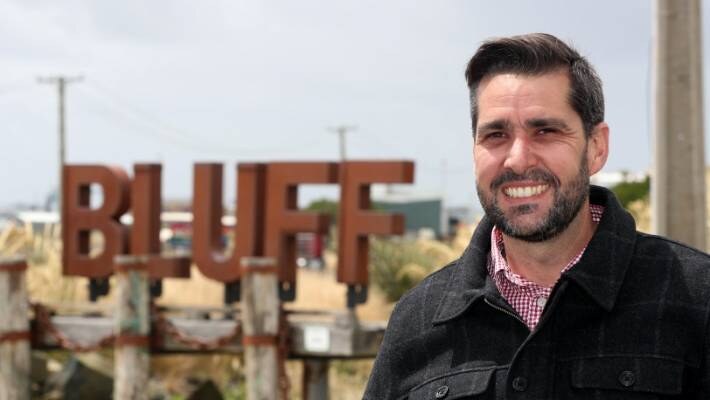
Southland has already undergone this transformation once before, in the 1830s, and Ngāi Tahu historian Dr Michael Stevens says the tribe will be looking to this period as it prepares for the next economic transition when the New Zealand Aluminium Smelter at Tiwai Point closes.

The tribe’s awareness of this history goes a long way to explaining why its so open to a future of green energy for the region and helps them reimagine Southland without the smelter, Stevens said.

With the arrival of whaling, Ngāi Tahu used its environmental knowledge and labour together with imported tools and capital to produce highly sought-after whale oil that “lit the streets of London, Paris, Boston and Bremen, and greased the wheels of the Industrial Revolution…”

Speaking at a science and innovation wānanga in December 2021, Stevens said it could do this again by turning the smelter site into a hydrogen plant.

“As several historians have noted before me, this reshaped Ngāi Tahu family patterns, patterns of labour allocation, consumption and production,” Stevens said.

A whaling station was set up in Bluff in 1836, hot on the heels of a measles’ outbreak in Sydney, that made its way to New Zealand.

But by 1838 a young Māori boy found himself living for a year in a German mission house.

“The world of our tipuna got big – really big – really quickly, But they filled that bigger space. They lived in the whole world, and we owe it to them to recommit ourselves to that horizon or vision.”

The whaling industry rewarded Ngāi Tahu’s underlying maritime inclinations and amplified earlier activities like inshore fishing and the seasonal tītī harvest, he said, because bigger boats meant bigger hauls.

It created new jobs for locals and attracted migrants from all over the world, who changed the region’s cultural landscape.

“Their new skills, ideas – and genes –reshaped southern Ngāi Tahu, but left the tribe intact,” Stevens said.

Many of Ngāi Tahu’s great, great-grandmothers married the whaling newcomers and the pou wāhine at the centre of Te Rau Aroha Marae marked the enduring significance of this moment, he said.

The economic transformation brought oars, sails, harpoons, wet-weather gear, and oil lamps, amongst other things, but Ngāi Tahu knowledge of weather, tides and whale migration patterns were the “software” needed to make it all work.

It introduced tipuna to capitalism, wage labouring, and credit used to buy Chinese tea and Indian tobacco.

The jobs also brought rangatahi south, allowing southern Māori to acquire firearms and boats to fend off raiders and regain control of their territory.

“In the modern era of corporate raiding, Ngāi Tahu Holdings would do well to heed the lesson on display here,” Stevens said.

“Simply put: Invercargill is not Christchurch’s poor cousin, but we are a saviour in waiting.”

With or without the closure of Tiwai, the tribe is working towards a regenerative and decarbonised future for Southland, he said.

“I am absolutely convinced that Murihiku is about to become better and look different.”

Posted: 10 January 2022

Prev article
All articles
Next article
  • News
    • Pānui updates
    • Photos

© 2026 Hokonui Rūnanga • Website by RS

Facebook
  • Home
  • About us
    • Who we are
    • Murihiku Regeneration
      • Structure and context
      • Office of Upoko
    • Property assets
    • Find us
    • Job vacancies
  • Our history
    • Our whakapapa - a deep connection to this place
    • Wai and Whakapapa
    • The Battle of Waitaramea
    • Poupoutunoa and Kauwaewhakatoro
    • Two Rivers: Mataura (Mata Ura) and Clutha (Mata Au)
      • Mata Ura - Mataura River
      • Mata Au - Clutha River
  • Events & key dates
    • He Ao Hou - New Futures Murihiku Teacher PD Day
    • Energy and Innovation Wānanga 2024
    • Energy and Innovation Expo 2023
      • He Ao Hou - New Futures Murihiku 22 May
      • Live Streaming of Wānanga 23 and 24 May
      • Hosts and Key Speakers 23-24 May
      • Energy and Innovation presentations - 23 May
        • Opening Addresses
        • Global Session
        • Empowering partnerships: government's role in Aotearoa's energy transition
        • Climate Economics
        • Regional Infrastructure
        • Social regeneration and innovation
        • Regional Innovation
        • The importance of the Māori economy through this change
      • Energy and Innovation presentations - 24 May
        • Regional Leadership Panel
        • Regional Plans and Priorities
        • Southern Green Hydrogen
        • Tiwai Smelter Future
        • Southland Aquaculture
        • Regional Case Studies: Decarbonisation
        • Innovation and Bluff Re-imagining
        • Confirming Priorities: wrap-up and closing
    • Science and Innovation Wānanga 2021
    • Energy, Infrastructure and Opportunities Wānanga 2026
  • Education & training
    • Education - Hokonui Rohe Team
    • Te Ara Aukati Kore - Education, Training, and Capability
      • Kia Tū Pathway Planning Programme
        • Kia Tū in schools
        • Kia Tū Tertiary Pathway Programme
        • Meet Your Kaiako - SIT Campus
      • Anamata Māia: Bold, Confident Futures Service
        • Our Kaimahi - Staff
      • Penapena Ā Kura: School Attendance Service
      • Te Aka Whai Mahi: Find Your Path
      • He Ao Hou: New Futures Murihiku
    • Have your say!
  • Environment
    • Kaupapa Taiao - Hokonui Floriculture
    • Taonga Research
      • Kanakana Research
      • Our research partners
    • Southern Ocean - Murihiku ki te Tonga
    • Energy Transition Programme
      • Regional Energy Action Plan - Towards 2030
      • Energy Transition Plan for Murihiku-Southland
      • Hydrogen and Green Energy
      • Tiwai Point
    • Te Tapu o Tāne
    • Our Kaimahi - Staff
  • Health & wellbeing
    • Whānau Ora Navigators
    • Community youth worker and advocacy service
    • Hokonui Community-Led Health
    • Kaumatua Health Days
    • Te Kakano - Nurse-led Clinics
    • Our Kaimahi - Staff
    • Hokonui Takiwā Health and Wellbeing Village of Support
    • Referral form
    • COVID-19
  • News
    • Pānui updates
    • Photos
  • Contact us
    • Register
  • Facebook
  • Search...