Hokonui Rūnanga Register
  • About us
    • Who we are
    • Murihiku Regeneration
    • Property assets
    • Find us
    • Job vacancies
  • Our history
    • Our whakapapa - a deep connection to this place
    • Wai and Whakapapa
    • The Battle of Waitaramea
    • Poupoutunoa and Kauwaewhakatoro
    • Two Rivers: Mataura (Mata Ura) and Clutha (Mata Au)
  • Events & key dates
    • Energy, Infrastructure and Opportunities Wānanga 2026
    • Energy and Innovation Wānanga 2024
    • Energy and Innovation Expo 2023
    • Science and Innovation Wānanga 2021
    • He Ao Hou - New Futures Murihiku Teacher PD Day
  • Education & training
    • Education - Hokonui Rohe Team
    • Te Ara Aukati Kore - Education, Training, and Capability
    • Have your say!
  • Environment
    • Kaupapa Taiao - Hokonui Floriculture
    • Taonga Research
    • Southern Ocean - Murihiku ki te Tonga
    • Energy Transition Programme
    • Te Tapu o Tāne
    • Our Kaimahi - Staff
  • Health & wellbeing
    • Whānau Ora Navigators
    • Community youth worker and advocacy service
    • Hokonui Community-Led Health
    • Kaumatua Health Days
    • Te Kakano - Nurse-led Clinics
    • Our Kaimahi - Staff
    • Hokonui Takiwā Health and Wellbeing Village of Support
    • Referral form
    • COVID-19
  • News
    • Pānui updates
    • Photos
  • Contact us
    • Register
  1. Home
  2. News

News

Visible work commenced by NZAS at the SCL pad

NZAS / Rio Tinto have commenced some work at Tiwai Point that will be visible to residents in Bluff over the next two weeks.A small excavator was craned onto the SCL pad recently to aid in SCL sampling.A small excavator was craned onto the SCL pad recently to aid in SCL sampling.
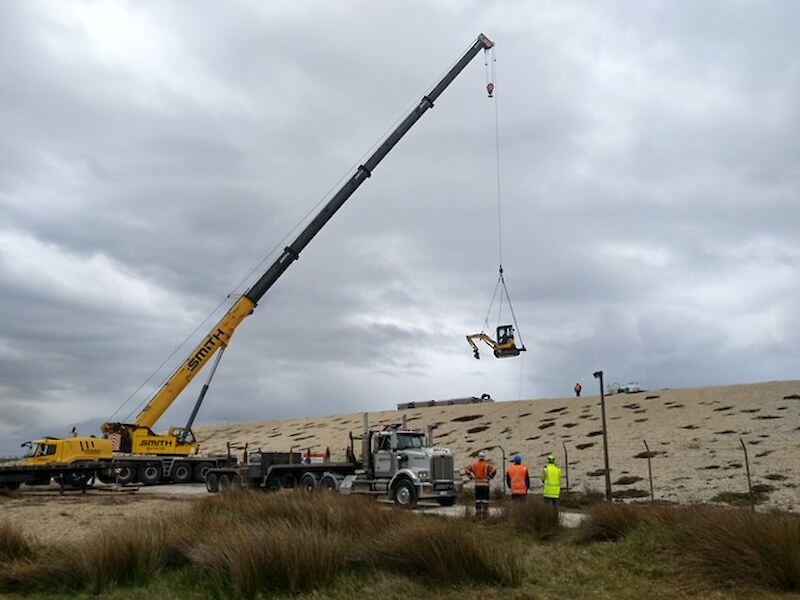
Work is being done at the spent cell liner (SCL) pad on the southern side of the smelter site. The work will involve adding small structures to the top of the SCL pad and using a small excavator to remove some SCL for testing purposes. An excavator will be sitting on top of the SCL pad as a result, making it more visible.

This work is part of a suite of activity being undertaken in relation to managing and ultimately removing SCL from site. This work is important to help inform future work programmes for remediation and waste management.

The purpose of this sampling is to better understand the composition of this material to inform processing options. Outside of the small amount of SCL removed for testing, no other SCL is proposed to be moved from the SCL pad.

It is likely to be several years before NZAS are in a position to commence excavation and processing of the material, however this sampling is an important first step in planning for the future work.

Posted: 27 October 2022
Network established to provide voice on health care in Hokonui

Article by Louisa Steyl. Published in Stuff.

The Hokonui region has become one of two places on the South Island to trial what healthcare may look like under the health reforms.

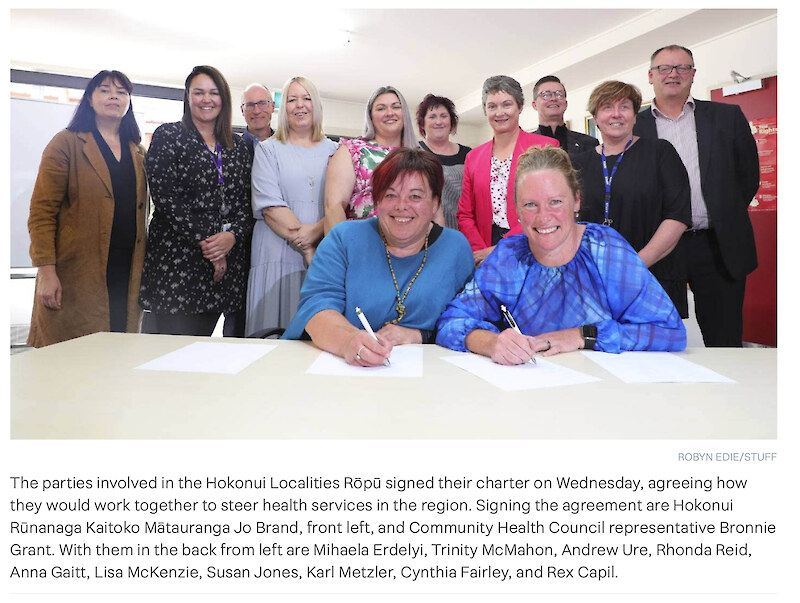
The Hokonui Localities Rōpū will now be “knocking on doors” and talking to residents about their health and wellbeing priorities, so they can help Health New Zealand – Te Whatu Ora decide how services will be delivered in the region.

Essentially, representatives from nine different bodies will be telling Health New Zealand – Te Whatu Ora how and where it needs to be spending money, based on what they hear from the community.

Hokonui Rūnanaga Kaitoko Mātauranga Jo Brand said, most people from Hokonui would recognise someone around the table – whether it be from a sports club or in a professional setting.

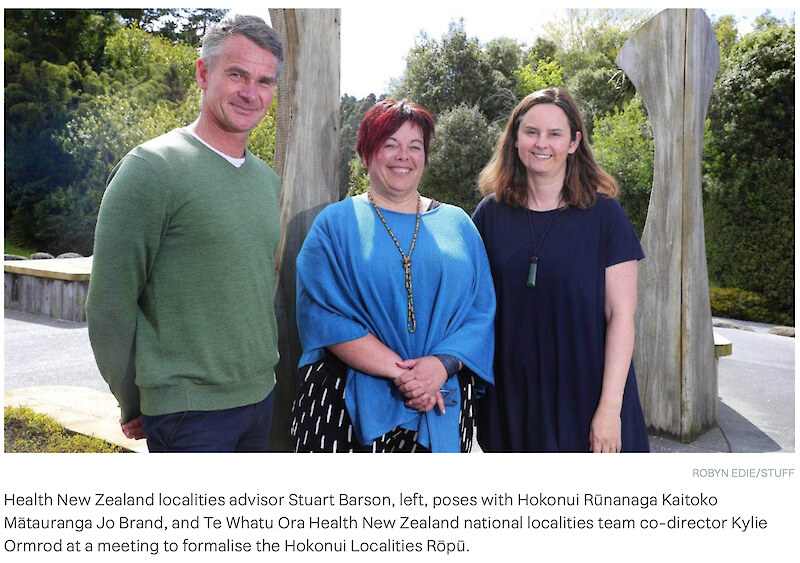
The group – made up of the Community Health Council, the Community Networking Trust, Gore District Council, Gore Health, Gore Medical Centre, Hokonui Rūnanaga, Regional Public Service, Te Hau o Te Ora, Partnered Primary Care Services, and Time for Change – Te Hurihanga – signed a charter agreement on Wednesday, outlining how they would work together.

Brand said while phrases like “locality networks” didn’t mean much to the public at this stage, the important thing to know was that they would be asked questions in the coming months about what they needed to be healthy and well.

Te Hau o Te Ora service manager Anna Gaitt said that while leaders could presume that might be access to a GP, for example, what people may say they need is food on the table when the breadwinner in their family is going through cancer treatment.

“It’s about what wellness means to you.”

Gore Health chief executive Karl Metzler said he was excited to be working with a wide range of agencies to get involved with the social determinants of health.

“Gore Health is the ambulance at the bottom of the cliff, but it’s exciting to work on building a fence at the top of the cliff,” he said, adding that it would be important to also look at how success would be measured.

Metzler said he was proud to be a part of one of the first 12 locality networks in the country but noted that it built of already strong and mature networks in Eastern Southland.

The group had proposed to trial the locality prototype based on the health partnerships already established in the area – most notably, Te Hau o Te Ora: a joint venture between WellSouth and iwi.

“This isn’t like we’re setting something up from scratch,” Metzler said.

Community Health Council representative Bronnie Grant said she was expecting access to services to be a recurring theme in feedback from residents, but hoped that the engagement process would help the team narrow down which services should be prioritised.

“You can’t fix everything all at once.”

Because the team would be looking at wellbeing in a broader sense, she expected to hear concerns about the cost of living, dental care and the implications of limited access, and attendance rates at school.

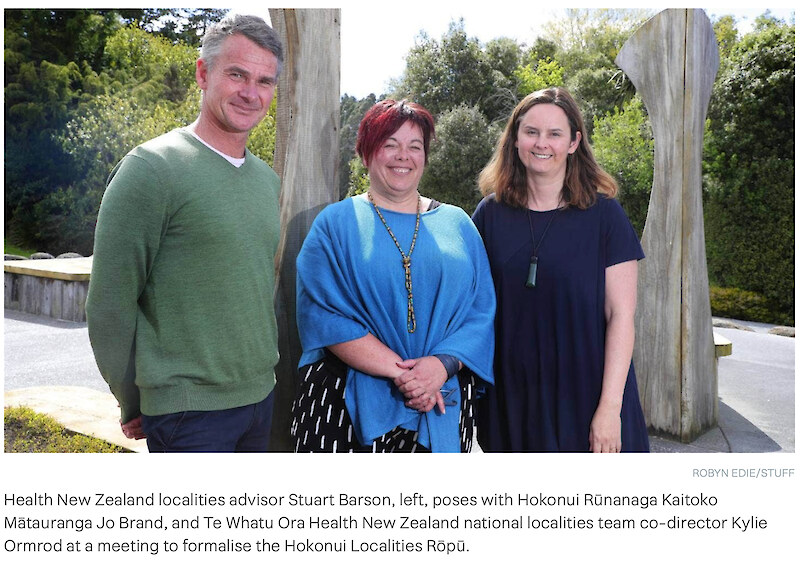
Te Whatu Ora national localities team co-director Kylie Ormrod said all Kiwis would be covered by a locality network by July 2024 and these geographic groups were expected to deliver a plan for their individual areas by July 2025.

Plans will be tweaked and assessed over time to make sure they’re responsive to the community’s needs, she said.

In the meantime, Health New Zealand was building a digital hub and giving network groups access to data and analytics tools.

Work was also under way to develop a guiding document explaining what locality networks were, Ormrod said.

Posted: 25 October 2022

Network established to provide voice on health care in Hokonui

Article by Louisa Steyl. Published in Stuff.

The Hokonui region has become one of two places on the South Island to trial what healthcare may look like under the health reforms.

The Hokonui Localities Rōpū will now be “knocking on doors” and talking to residents about their health and wellbeing priorities, so they can help Health New Zealand – Te Whatu Ora decide how services will be delivered in the region.

Essentially, representatives from nine different bodies will be telling Health New Zealand – Te Whatu Ora how and where it needs to be spending money, based on what they hear from the community.

Hokonui Rūnanaga Kaitoko Mātauranga Jo Brand said, most people from Hokonui would recognise someone around the table – whether it be from a sports club or in a professional setting.

The group – made up of the Community Health Council, the Community Networking Trust, Gore District Council, Gore Health, Gore Medical Centre, Hokonui Rūnanaga, Regional Public Service, Te Hau o Te Ora, Partnered Primary Care Services, and Time for Change – Te Hurihanga – signed a charter agreement on Wednesday, outlining how they would work together.

Brand said while phrases like “locality networks” didn’t mean much to the public at this stage, the important thing to know was that they would be asked questions in the coming months about what they needed to be healthy and well.

Te Hau o Te Ora service manager Anna Gaitt said that while leaders could presume that might be access to a GP, for example, what people may say they need is food on the table when the breadwinner in their family is going through cancer treatment.

“It’s about what wellness means to you.”

Gore Health chief executive Karl Metzler said he was excited to be working with a wide range of agencies to get involved with the social determinants of health.

“Gore Health is the ambulance at the bottom of the cliff, but it’s exciting to work on building a fence at the top of the cliff,” he said, adding that it would be important to also look at how success would be measured.

Metzler said he was proud to be a part of one of the first 12 locality networks in the country but noted that it built of already strong and mature networks in Eastern Southland.

The group had proposed to trial the locality prototype based on the health partnerships already established in the area – most notably, Te Hau o Te Ora: a joint venture between WellSouth and iwi.

“This isn’t like we’re setting something up from scratch,” Metzler said.

Community Health Council representative Bronnie Grant said she was expecting access to services to be a recurring theme in feedback from residents, but hoped that the engagement process would help the team narrow down which services should be prioritised.

“You can’t fix everything all at once.”

Because the team would be looking at wellbeing in a broader sense, she expected to hear concerns about the cost of living, dental care and the implications of limited access, and attendance rates at school.

Te Whatu Ora national localities team co-director Kylie Ormrod said all Kiwis would be covered by a locality network by July 2024 and these geographic groups were expected to deliver a plan for their individual areas by July 2025.

Plans will be tweaked and assessed over time to make sure they’re responsive to the community’s needs, she said.

In the meantime, Health New Zealand was building a digital hub and giving network groups access to data and analytics tools.

Work was also under way to develop a guiding document explaining what locality networks were, Ormrod said.

Posted: 25 October 2022

Strong interest in offshore maritime energy development

… including offshore wind, tidal, and wave energy opportunities

Ngāi Tahu representation at the Offshore Maritime Energy Development hui (left to right) Jacqui Caine (Office of Te Rūnanga o Ngāi Tahu); Gail Thompson (Awarua Rūnaka); and Terry Nicholas (Hokonui Rūnanga and Murihiku Regeneration).Ngāi Tahu representation at the Offshore Maritime Energy Development hui (left to right) Jacqui Caine (Office of Te Rūnanga o Ngāi Tahu); Gail Thompson (Awarua Rūnaka); and Terry Nicholas (Hokonui Rūnanga and Murihiku Regeneration).Today (Tuesday 11 October), strong representation from Ngāi Tahu, led by Kaiwhakahaere Lisa Tumahai, Gail Thompson (Awarua Rūnaka), Terry Nicholas (Hokonui Rūnanga and Murihiku Regeneration), and supported by Jacqui Caine - Office of Te Rūnanga o Ngāi Tahu to engage with Minister Megan Woods (Energy and Resources), hosted by the Ministry of Business, Innovation and Employment (MBIE), and attended by other interested Iwi representatives, central and local government and interested industry players.Over 100 interested parties are attending today’s hui to discuss how offshore wind development can occur within Aotearoa New Zealand.Over 100 interested parties are attending today’s hui to discuss how offshore wind development can occur within Aotearoa New Zealand.

Over 100 interested parties are attending today’s hui to discuss how offshore wind development can occur within Aotearoa New Zealand.

Murihiku-Southland has been identified as one of the key potential first development areas and the hui will be looking at how the government, Iwi and industry can do this in a constructive way.

Terry Nicholas said that, “any opportunity will be undertaken with a clear focus on longer term benefits - including supporting our communities, building social infrastructure and also making sure that environmental consideration sits at the fore front of planning.”

“We see maritime energy opportunities as a key part of our developing Murihiku renewable energy strategy”.

The government confirmed that it was looking at Iwi partnerships and moving more quickly towards supporting initiatives such as those identified in Murihiku-Southland.

Posted: 11 October 2022

Ngāi Tahu and NZAS, Rio Tinto reach agreement to restore whenua at Tiwai Point

An agreement has been reached by Murihiku Rūnaka and Te Rūnanga o Ngāi Tahu with the New Zealand Aluminium Smelters Limited (NZAS) and Rio Tinto Aluminum Limited to work together on restoring the whenua (land) at the Tiwai Peninsula and the future of the Tiwai aluminium smelter beyond December 2024.

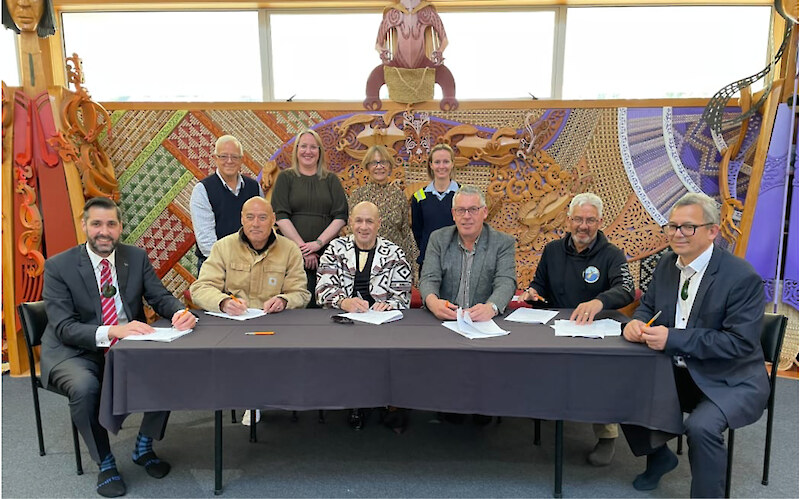
The agreement was signed on Friday 30 September 2022, at Te Rau Aroha Marae at Motupōhue (Bluff) by representatives from Murihiku Rūnaka and Te Rūnanga o Ngāi Tahu.

Seated L-R: Michael Stevens (Te Rūnanga o Awarua Alt Rep); Rewi Davis (Ōraka Aparima Rūnaka Rep); Cyril Gilroy (Chair Waihōpai Rūnaka); Terry Nicholas (Hokonui Rūnanga Rep); Riki Dallas (Kaihautū - General Manager Ōraka Aparima Rūnaka); Dean Whaanga (Kaiwhakahaere Awarua Rūnaka) Standing L-R: Albert Brantley (Advisor to parties); Megan Reid (Project Manager for Awarua Working Group); Gail Thomson (Te Rūnanga o Awarua Rep); Nicole Atherton (Rio Tinto General Manager Closure Readiness).Seated L-R: Michael Stevens (Te Rūnanga o Awarua Alt Rep); Rewi Davis (Ōraka Aparima Rūnaka Rep); Cyril Gilroy (Chair Waihōpai Rūnaka); Terry Nicholas (Hokonui Rūnanga Rep); Riki Dallas (Kaihautū - General Manager Ōraka Aparima Rūnaka); Dean Whaanga (Kaiwhakahaere Awarua Rūnaka) Standing L-R: Albert Brantley (Advisor to parties); Megan Reid (Project Manager for Awarua Working Group); Gail Thomson (Te Rūnanga o Awarua Rep); Nicole Atherton (Rio Tinto General Manager Closure Readiness).

All parties agreed to work together on plans to remove waste, conduct environmental monitoring, and remediate the Tiwai Point site, which is a key priority for mana whenua, NZAS and Rio Tinto.

NZAS Chief Executive Chris Blenkiron said “We’re proud to be working alongside Murihiku Rūnaka and Te Rūnanga o Ngāi Tahu in continuing this important mahi. Their guidance will be invaluable as we progressively remediate the site.

“This agreement reinforces the commitments we’ve made to remove waste and remediate the site, irrespective of the smelter’s future,” he said.

Murihiku Rūnaka hold mana whenua and mana moana over the region and are kaitiaki (guardians) over the whenua and moana. Murihiku Rūnaka is comprised of four Papatipu Rūnanga including Te Rūnaka o Awarua, Waihōpai Rūnaka, Ōraka Aparima Rūnaka and Hokonui Rūnanga.

Te Rūnaka o Awarua is leading the partnership on behalf of Murihiku Rūnaka and will actively engage with NZAS and all parties around remediation, cultural considerations, and future intentions. Find out more about the Awarua Working Group.

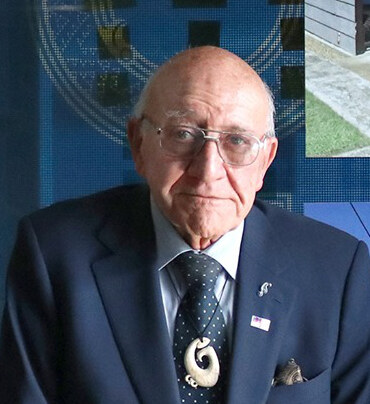
Upoko o Te Rūnaka o Awarua Tā Tipene O’Regan has advocated for this partnership and is pleased to reach this milestone.Tā Tipene O’Regan, Upoko o Te Rūnaka o Awarua.Tā Tipene O’Regan, Upoko o Te Rūnaka o Awarua.

“I have always believed there is a future for this land. Now we can engage in responsible environmental management and look at a long-term future for Tiwai.”

“It is important to note that while the remediation issue is led by Te Runaka o Awarua, it is also supported by other Runaka within Murihiku,” he said.

The agreement is a commitment by the iwi to share mātauranga Māori (Māori knowledge) and kōrero tuku iho (history and traditions) relative to Tiwai to support Rio Tinto to responsibly manage the environment as the future of the smelter is determined.

Rio Tinto Aluminium Chief Executive Ivan Vella said “NZAS produces some of the lowest carbon, highest purity aluminium in the world. We are working hard to secure a longer future for NZAS so it can continue supporting global decarbonisation, and we must make sure its environmental performance matches these objectives.”

“Rio Tinto is working to improve our relationship with mana whenua and to do this in a way that recognises their kaitiaki responsibilities. This partnership demonstrates how we intend to operate in Aotearoa going forward,” he said.

All parties believe the region has a strong future with a range of potential new industries, technologies and renewable energy bringing new jobs and a wide range of economic benefits.

Posted: 5 October 2022

Prev page
Page 21 of 42
Next page

Also in this section

Pānui updates Photos
  • News
    • Pānui updates
    • Photos

© 2026 Hokonui Rūnanga • Website by RS

Facebook
  • Home
  • About us
    • Who we are
    • Murihiku Regeneration
      • Structure and context
      • Office of Upoko
    • Property assets
    • Find us
    • Job vacancies
  • Our history
    • Our whakapapa - a deep connection to this place
    • Wai and Whakapapa
    • The Battle of Waitaramea
    • Poupoutunoa and Kauwaewhakatoro
    • Two Rivers: Mataura (Mata Ura) and Clutha (Mata Au)
      • Mata Ura - Mataura River
      • Mata Au - Clutha River
  • Events & key dates
    • Energy, Infrastructure and Opportunities Wānanga 2026
    • Energy and Innovation Wānanga 2024
    • Energy and Innovation Expo 2023
      • He Ao Hou - New Futures Murihiku 22 May
      • Live Streaming of Wānanga 23 and 24 May
      • Hosts and Key Speakers 23-24 May
      • Energy and Innovation presentations - 23 May
        • Opening Addresses
        • Global Session
        • Empowering partnerships: government's role in Aotearoa's energy transition
        • Climate Economics
        • Regional Infrastructure
        • Social regeneration and innovation
        • Regional Innovation
        • The importance of the Māori economy through this change
      • Energy and Innovation presentations - 24 May
        • Regional Leadership Panel
        • Regional Plans and Priorities
        • Southern Green Hydrogen
        • Tiwai Smelter Future
        • Southland Aquaculture
        • Regional Case Studies: Decarbonisation
        • Innovation and Bluff Re-imagining
        • Confirming Priorities: wrap-up and closing
    • Science and Innovation Wānanga 2021
    • He Ao Hou - New Futures Murihiku Teacher PD Day
  • Education & training
    • Education - Hokonui Rohe Team
    • Te Ara Aukati Kore - Education, Training, and Capability
      • Kia Tū Pathway Planning Programme
        • Kia Tū in schools
        • Kia Tū Tertiary Pathway Programme
        • Meet Your Kaiako - SIT Campus
      • Anamata Māia: Bold, Confident Futures Service
        • Our Kaimahi - Staff
      • Penapena Ā Kura: School Attendance Service
      • Te Aka Whai Mahi: Find Your Path
      • He Ao Hou: New Futures Murihiku
    • Have your say!
  • Environment
    • Kaupapa Taiao - Hokonui Floriculture
    • Taonga Research
      • Kanakana Research
      • Our research partners
    • Southern Ocean - Murihiku ki te Tonga
    • Energy Transition Programme
      • Regional Energy Action Plan - Towards 2030
      • Energy Transition Plan for Murihiku-Southland
      • Hydrogen and Green Energy
      • Tiwai Point
    • Te Tapu o Tāne
    • Our Kaimahi - Staff
  • Health & wellbeing
    • Whānau Ora Navigators
    • Community youth worker and advocacy service
    • Hokonui Community-Led Health
    • Kaumatua Health Days
    • Te Kakano - Nurse-led Clinics
    • Our Kaimahi - Staff
    • Hokonui Takiwā Health and Wellbeing Village of Support
    • Referral form
    • COVID-19
  • News
    • Pānui updates
    • Photos
  • Contact us
    • Register
  • Facebook
  • Search...